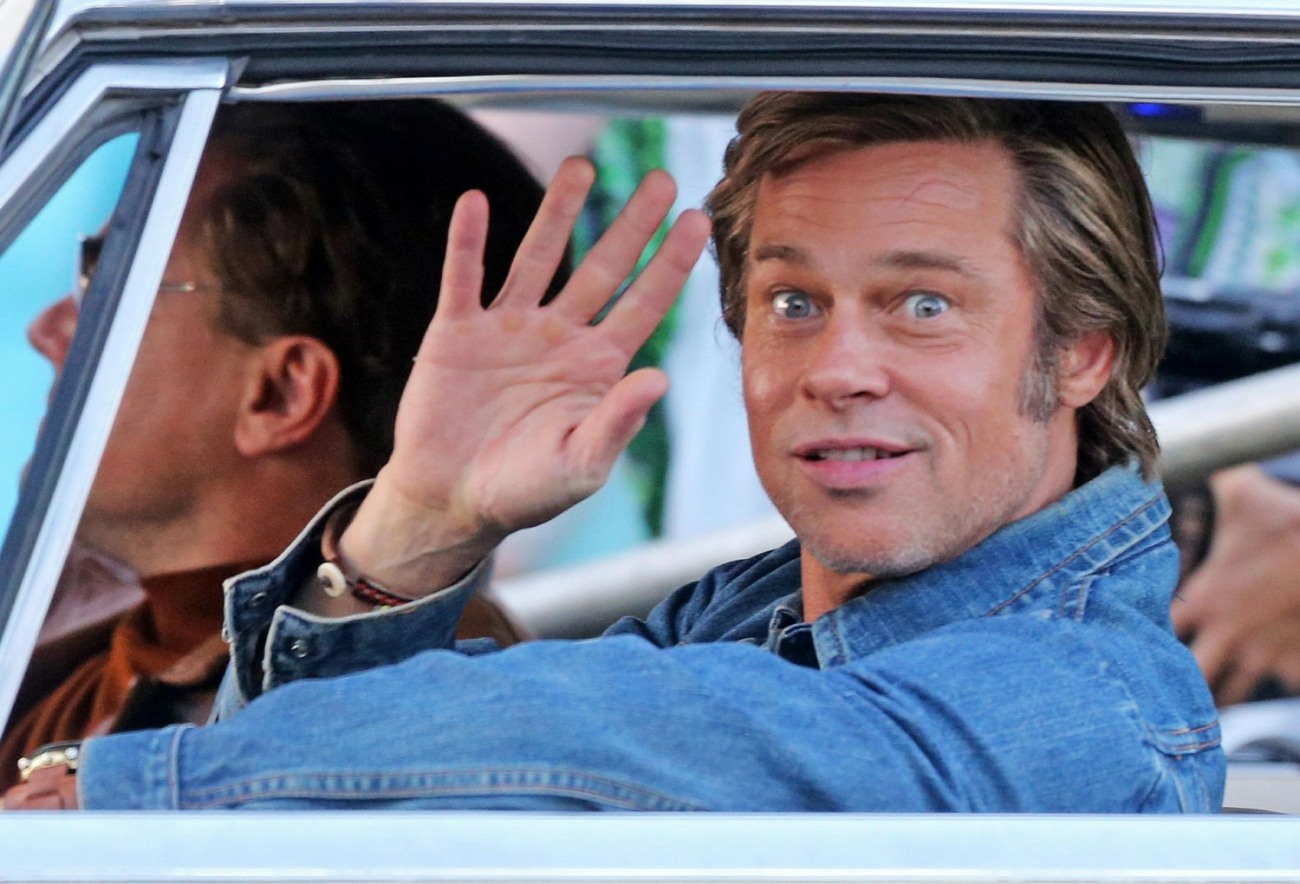
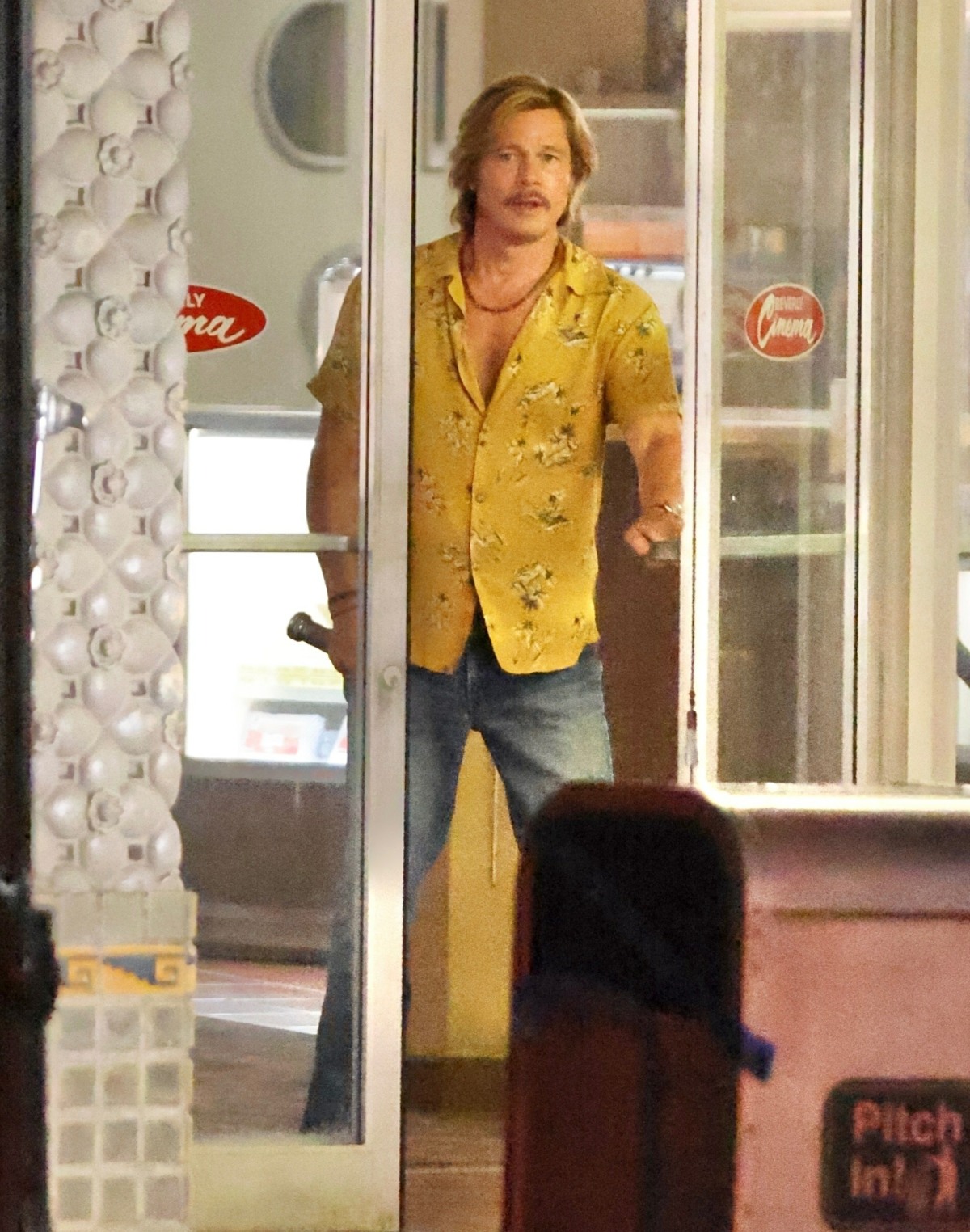
One of the dumbest films coming out this year is The Adventures of Cliff Booth, a faux-sequel to Quentin Tarantino’s Once Upon a Time In Hollywood. Brad Pitt won the Best Supporting Actor Oscar for OUATIH, which happened relatively soon after Angelina Jolie fled their private plane after Brad drunkenly terrorized her and their children across an international flight. My point? While I understand why Pitt was open to returning to the “Cliff Booth” character, there was really no need for a stand-alone spinoff sequel whatsoever, especially everything we know now. What’s also funny is that Tarantino refused to direct it because he swears up and down that he’ll only direct ten films, and he has some kind of hang-up about sequels. So QT and Brad Pitt brought in David Fincher to direct this utter vanity project, and it will stream on Netflix this summer. We knew that this was a pretty expensive vanity project too – reportedly, this cost $200 million. Well, Puck News revealed the breakdown in salaries for Fincher, Pitt and Tarantino.
Everyone in Hollywood just accepts that we’re more likely to bump into an industry friend at Heathrow than at Craig’s, and that big-budget studio movies are made mostly in the U.K., where an incentive can return more than 30 percent of the qualified spend, highly flexible and with no cap on the money available. Project Hail Mary, for instance, cost Amazon $248 million to make. But after the U.K. credits, the final net budget was $192 million, according to internal data shared with me. And unlike in California, above-the-line expenses are eligible in the U.K.
That’s a big deal on a movie like, say, Netflix’s upcoming sequel to Once Upon a Time… in Hollywood, which was shot last year in California. Brad Pitt is making $40 million to star and produce, per several sources, director David Fincher is getting $20 million, and writer-producer Quentin Tarantino was paid more than $20 million for a one-picture license to make the movie from his script. (Tarantino always retains ownership of his material.) That’s $80 million in above-the-line costs that Netflix couldn’t include in its qualified spend for its California rebate but could have if the film was shot in the U.K. It’s no wonder that in the nearly five years of writing What I’m Hearing, I’ve been waking up earlier and earlier. More than ever, it feels like everyone I need to talk to is on London time.
Again, Netflix is shelling out $80-million-plus just for Pitt, Fincher and Tarantino’s story/characters. Then the production cost around $120 million? With Netflix laying out that kind of cash for a dumb “nobody asked for this” sequel, it’s clear that Netflix has all kinds of money to burn on these kinds of projects. Keep this in mind when royalists are ranting about the Sussexes’ Netflix contract too. Someone pointed out that because TAOCB is streaming-exclusive, that means no one is eligible for a backend. So they’re getting everything up front. I don’t know… it makes sense when it’s Knives Out, but cutting Pitt a $40 million check sounds like bad business. But hey, what do I know.
Photos courtesy of Backgrid, screencap from trailer.