The New York Mets are proving a brutal baseball truth: a massive payroll can buy stars, but it cannot buy a functional identity.
That is the uncomfortable takeaway from two New York Post Sports+ columns by Phil Mushnick and Joel Sherman, both of which painted the Mets as a team spending like a powerhouse while still operating like a franchise searching for itself.
The issue is not just Juan Soto. It is not just Devin Williams. It is not just another rough April.
It is the bigger picture.
The Mets paid for certainty. Instead, they have created more questions.

Mets’ Spending Hasn’t Fixed Their Bigger Problem
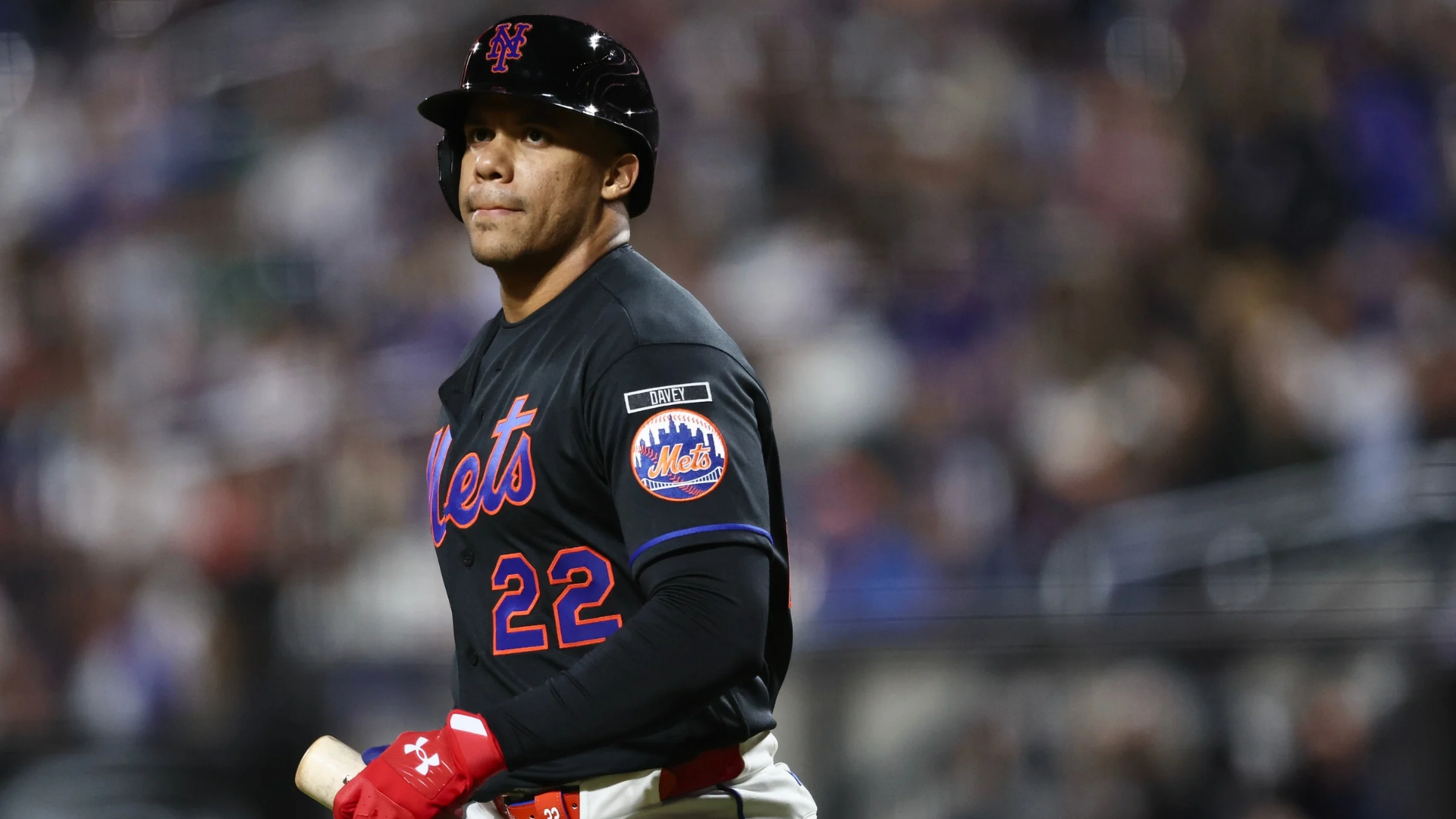
GettyJuan Soto #22 of the New York Mets walks up to bat during the second inning against the Minnesota Twins at Citi Field on April 23, 2026 in New York City. (Photo by Heather Khalifa/Getty Images)
Mushnick’s criticism centered on Soto, the $765 million superstar who was supposed to change everything about the Mets’ ceiling. Instead, his early tenure has already brought questions about connection, leadership, and urgency.
That matters because Soto was not signed to be just another elite bat. He was signed to become the face of the franchise, the player who could help turn the Mets into the kind of operation Steve Cohen has been trying to build since buying the team.
But during Soto’s injury absence, the Mets collapsed through a 12-game losing streak. Mushnick pointed to Soto’s own admission that he stayed detached from the club during that stretch, which only made the criticism louder.
For a player making that kind of money, absence is one thing. Detachment is another.
The Mets also took on Luis Robert Jr., another expensive talent with durability concerns. That move fits the same pattern. The roster looks impressive in theory, but far less stable in reality.
The Mets keep chasing upside. The problem is that upside does not matter if the foundation keeps cracking.

Braves Comparison Makes Mets Look Worse
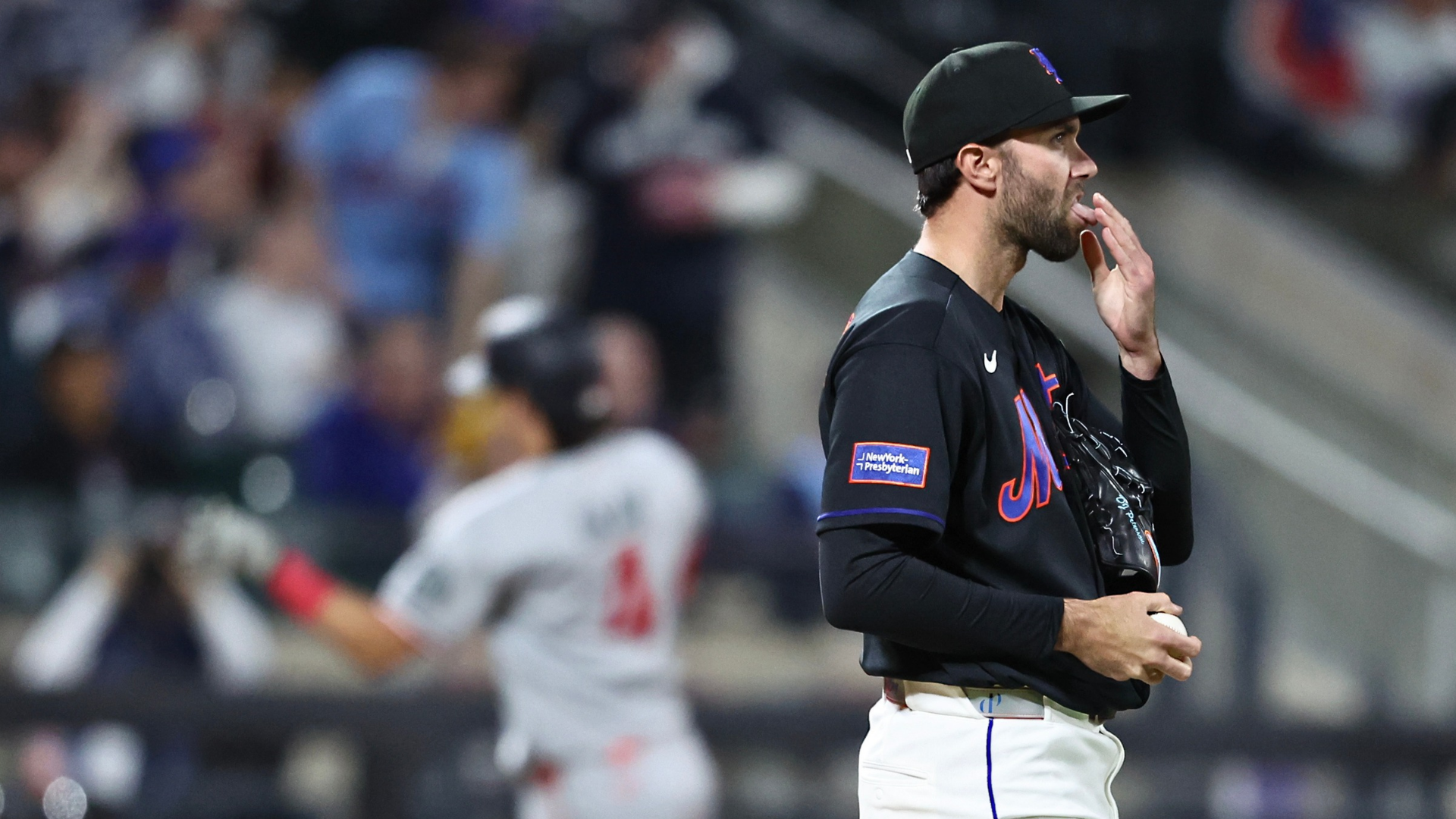
GettyPitcher David Peterson #23 of the New York Mets reacts after giving up a solo home run to Tristan Gray #4 of the Minnesota Twins during the sixth inning at Citi Field on April 23, 2026 in New York City. (Photo by Heather Khalifa/Getty Images)
Sherman’s column made the Mets’ problems look even sharper by comparing them to the Atlanta Braves.
Atlanta entered 2026 battered by injuries, a suspension, a managerial change, and major pitching uncertainty. Yet the Braves still opened as the class of the National League East, while the Mets continued searching for answers.
That contrast is damaging.
The Braves signed Robert Suarez for three years and $45 million. The Mets gave Devin Williams three years and $51 million. Early on, Suarez has looked like a stabilizing force, while Williams has become part of a messy bullpen picture.
That is not just bad luck. It is a difference in roster construction.
Atlanta has survived setbacks because it has depth, role clarity, and organizational confidence. The Mets have spent more money, but they still look reactive. Their bullpen has lacked structure. Their roster has lacked flexibility. Their in-game operation has already produced avoidable mistakes.
That is why this matters.
The Mets are not losing the division race because Cohen refuses to spend. They are falling behind because the Braves continue to show how much smarter spending matters.

Mets Still Haven’t Built Their Own Identity

GettyNew York Mets owner Steve Cohen looks on as his team takes batting practice before a game against the Minnesota Twins at Citi Field on April 22, 2026 in New York City. (Photo by Jim McIsaac/Getty Images)
The Mets want to be Dodgers East. That ambition makes sense. Cohen has the resources, the market, and the willingness to spend.
But the Dodgers model is not just about money.
It is about player development, depth, pitching infrastructure, and stars who fit inside a larger system. Right now, the Mets have the expensive part down. The rest remains unfinished.
That is the real controversy here.
The Mets are no longer a small-market excuse machine. They cannot blame payroll limitations. They cannot blame a lack of aggression. They have chosen their path, spent their money, and built this roster.
Now the results have to follow.
If they do not, this season could become more than another disappointment. It could become a referendum on whether the Mets actually know how to build a winner, or whether they only know how to buy the appearance of one.
Until they prove otherwise, the Mets do not look like Dodgers East.
They look like baseball’s most expensive work in progress.
Like Heavy Sports’s content? Be sure to follow us.
This article was originally published on Heavy Sports
The post Mets’ Payroll Problem Is Getting Harder to Ignore appeared first on Heavy Sports.