The Boston Celtics had enough reasons to believe their season should have lasted longer. They won 56 games, got Jayson Tatum back from a ruptured Achilles tendon, and carried a 3-1 series lead over the Philadelphia 76ers.
None of it was enough.
Philadelphia got stronger as the series went on, and Boston found itself eliminated at home in Game 7 for the second time in three years. Days later, Brad Stevens sat down in front of the media and did not look for excuses. The Celtics’ president of basketball operations was direct about what the series exposed and what needs to change.
Stevens Identifies the Core Problem
Stevens addressed several topics during the press conference, but one thread ran through nearly every answer. Boston’s offense had too few ways to pressure the basket when Philadelphia took away the comfortable stuff.
The paint offense was not good enough. With Joel Embiid protecting the rim in the possessions that mattered most, the Celtics had no reliable counter. Their offense too often drifted into difficult jumpers and contested threes when cleaner looks were not available.
Stevens was direct about what that means heading into the offseason. Getting to the rim remained an unsolved problem, and Stevens made clear the roster needs to reflect that priority this summer.
“We need to add to our team to do that,” Stevens said.
He acknowledged the broader offensive picture had been a concern beyond one series. The first look too often became the only look, and when that shot was covered, Boston did not have enough pressure points to bend the defense.

GettyBrad Stevens.
What the Numbers Confirmed for the Celtics
The Philadelphia series gave hard data to something that had been a quiet concern all season.
Neemias Queta had been a genuine bright spot during the regular season, setting career highs across the board. The playoffs told a different story. Foul trouble followed him throughout the matchup, and his scoring never reached the level Boston needed against a frontcourt as physically imposing as Philadelphia’s.
Nikola Vucevic, acquired at the trade deadline for frontcourt depth, offered stretches of perimeter shooting but could not contain Embiid defensively when the series shifted. Embiid took full control in Game 7, finishing with 34 points and 12 rebounds while controlling both ends of the floor.
Boston cycled through multiple defenders on him. None held for long.
The veterans who had given the Celtics credible frontcourt options in previous playoff runs were gone. No Al Horford. No Kristaps Porzingis. The gap their departures left became obvious once Embiid started dictating the terms of the series.
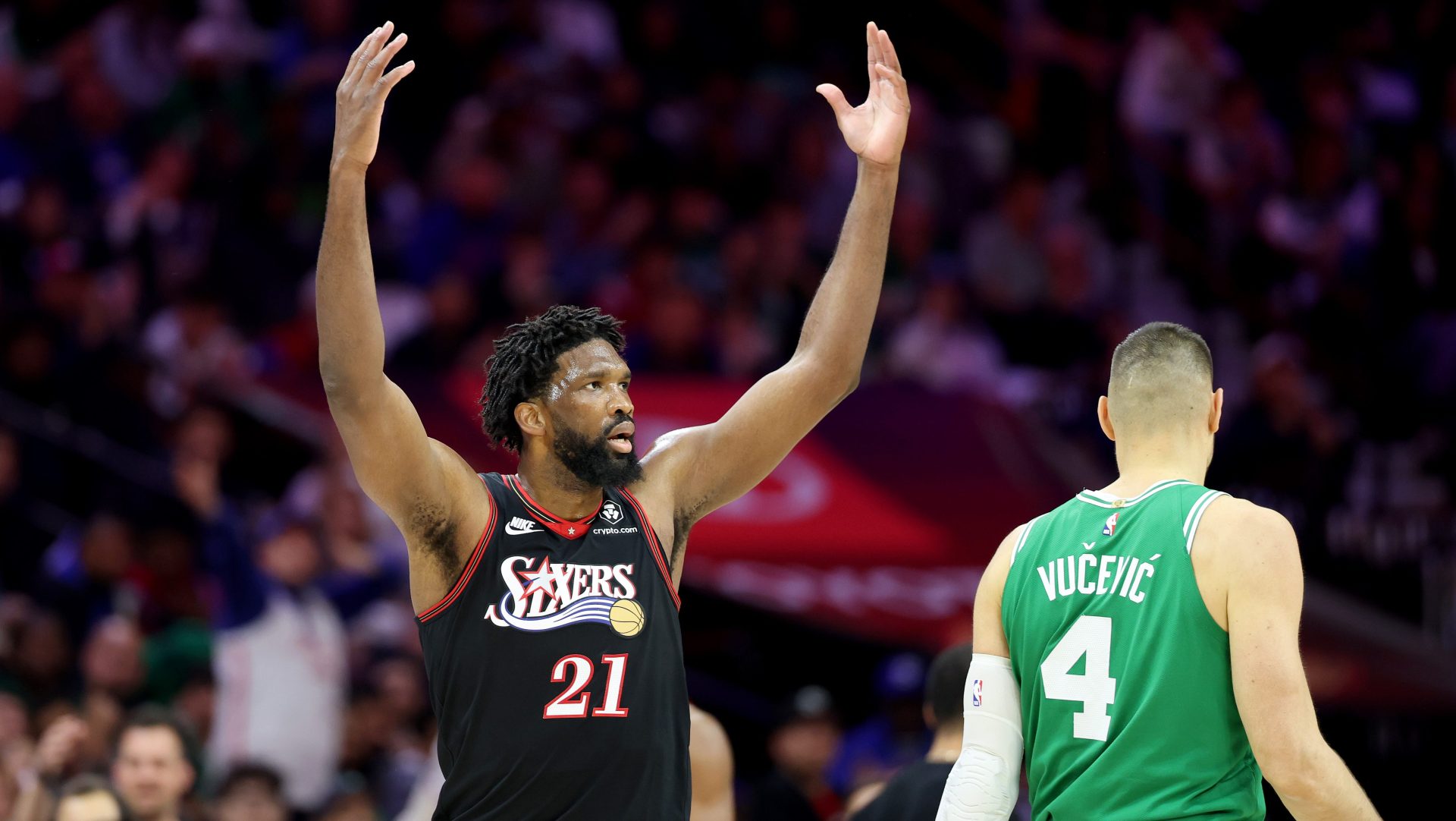
GettyPHILADELPHIA, PENNSYLVANIA – APRIL 26: Joel Embiid #21 of the Philadelphia 76ers pumps up the crowd during the first half of game four of the Eastern Conference first round playoffs against the Boston Celtics at Xfinity Mobile Arena on April 26, 2026 in Philadelphia, Pennsylvania. (Photo by Emilee Chinn/Getty Images)
What Stevens Has to Work With
Stevens was honest about the problem. He was equally clear that the organization has the tools to address it.
A sizable trade exception and a midlevel exception give Boston genuine flexibility heading into the summer. Free agency may offer depth, but the trade market is where Boston is more likely to find a real answer.
Stevens has used both levers aggressively in the past. He has never been reluctant to reshape a roster when the situation demanded it.
The Jays are still here. The core is intact. But the pieces around them need to be rebuilt with a specific problem in mind, and Stevens now has a precise diagnosis to work from.
Final Word for the Celtics
Stevens put it simply. He said Philadelphia deserved to win. The offensive limitations were real. The roster needs meaningful additions.
That kind of clarity from the top sets the tone for an offseason with genuine urgency behind it. The problem is identified. The resources are there.
Now Stevens has to solve it.
Like HEAVY’s content? Be sure to follow us.
This article was originally published on HEAVY
The post Celtics’ Brad Stevens Reveals Offseason Priority After Playoff Exit appeared first on HEAVY.