Last summer, Megan Chung was given one more year to live.
Chung, a mother of three college-age kids from Hinsdale, was diagnosed with pancreatic cancer in April 2024. The disease — one of the most devastating and deadly cancers that kills roughly 50,000 people in the United States every year — already was advanced, and an inoperable tumor was crushing her intestines.
“When you’re diagnosed with pancreatic cancer, ‘I’m really sorry’ is the first thing your doctor says,” said Chung, 55.
The most aggressive chemotherapy treatments often only provide patients minimal time, about four to six months. Chung went through six months of chemotherapy, then radiation and surgery. She was briefly disease-free, but then it came back — a typical and brutal reality with pancreatic cancer.
Soon after, she got into a clinical trial at the University of Chicago for a drug now considered to be the most promising treatment for pancreatic cancer — daraxonrasib. The treatment — not yet approved for use but nearing regulatory approval — is the first to considerably extend the lives of people with pancreatic cancer.
“It was pretty miraculous,” Chung said.

Dr. Ardaman Shergill, a University of Chicago oncologist who specializes in pancreatic cancer, called the drug “revolutionary.”
“This is going to change everything for pancreatic cancer,” Shergill said. “Where we go from here is endless.”
Daraxonrasib is a pill taken three times a day. The federal Food and Drug Administration recently granted Revolution Medicines, the company behind the drug, permission to give some patients access to the drug through a regulatory shortcut called expanded access.
The drug targets a mutation in pancreatic cancer cells that occurs in more than 90% of cases, Shergill said.
“That mutation is foundational to pancreatic cancer,” Shergill said. “After a very long time, we have a pill that targets that mutation.”
The method of targeting that mutation, called KRAS, is so promising that similar drugs targeting the mutation are being tested for other cancers, including those of the lungs and colon.
People with metastatic pancreatic cancer who have “previously been treated” are eligible to receive the drug, according to the FDA. The drug maker will provide it free — common practice with expanded access.
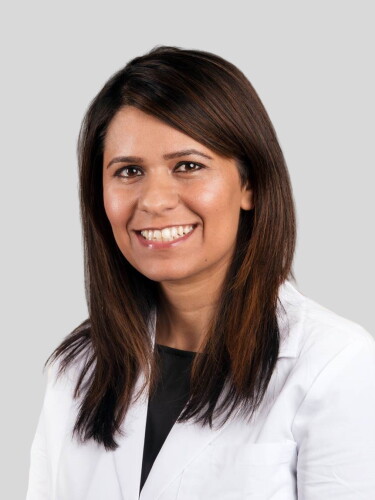
Two recent clinical trials of the drug had the most encouraging results ever for a pancreatic cancer treatment. Shergill oversaw the University of Chicago’s participation in that global study.
People previously treated were randomly given daraxonrasib or a second round of a standard treatment. The experimental drug more than doubled survival rates. The survival rate with the standard chemotherapy treatment was six months. People who got the new drug got 13 more months of life, on average.
“It’s not five to 10 years, but it’s really great and more than double the standard treatment,” Shergill said. “We’re getting survivals at levels we haven’t seen before.”
The research is being presented this weekend at McCormick Place during a massive conference held by the American Society of Clinical Oncology.
The drug needs full approval from the FDA before it can be available to all patients. Shergill said she expects that will be by the end of this summer or the fall.
Since the FDA’s decision to expand access, Shergill and others have been flooded with interest from patients.
Chung, who used to work as a physician, was thrilled she was randomly assigned the drug. Taking a pill three times a day was far better than eight hours tied to a chemo IV drip. The side effects have been far more manageable than with chemo. She developed a rash that she’s been able to get treated.
“Comparatively, it’s been so much better,” Chung said. “Well, first of all, I’m alive. Most treatments give you four to six months. And I’ve gotten a whole ‘nother year.”
Chung and her family traveled to Korea to visit relatives. She was able to help her daughter move into her college dorm in Boston and attend family weekend — something she missed out on when her twin sons headed to school because she was too sick.
The drug gave her time that chemotherapy couldn’t, but it isn’t a cure. Chung is well aware her extra time might be coming to an end. She started taking the drug last June.

“You worry most about disrupting your family’s life,” she said. “Like whether you should bring your kids home from college to keep them home with you. What is the right time to do that when you have a terminal diagnosis?”
Chung said she’s comforted by her faith and that she’s blessed to have a close family and strong, supportive community.
Still, she worries that funding cuts for medical research could affect major advancements like daraxonrasib.
“They were working on targeting this protein for a long, long time,” she said. “All this research that occurs in these obscure labs and all these different places is so important… We cannot curtail research.”