The New York Yankees may have discovered something far more significant than a spring training hot streak, and J.C. Escarra is quickly becoming a case study that demands attention.
What once seemed like a passing fad—the so-called “torpedo bat” that briefly made headlines last season—is now reappearing with purpose within the Yankees organization. This time, it’s not about being curious or experimenting. It’s about refinement, conviction, and a player’s complete commitment to a tool designed specifically to maximize his offensive capabilities.
Escarra is no longer testing the concept. According to the New York Post’s Greg Joyce, he fully embraced it.
After dabbling with the torpedo bat in 2025 and abandoning it when results weren’t immediate, the 30-year-old catcher returned to it this spring with a new perspective. With the help of the Yankees’ analytics department, he discovered a version tailored to his swing: a heavier model inspired by Aaron Judge’s bat, redesigned to maximize barrel coverage and contact quality.
That commitment is already yielding measurable results.
Escarra’s consistency in his impact on the baseball has improved significantly during spring training. According to Statcast, his average exit velocity has risen to 94.1 mph, a significant improvement over the 90.8 mph he achieved during his rookie season. More importantly, his hardest contact has increased, including a 438-foot home run at 108.4 mph, which would have been among his best even in a full regular season sample.
These are not empty spring numbers. They point to a hitter making more authoritative contact on a consistent basis.
Yankees Are Turning a Gimmick Into a Real Offensive Adjustment
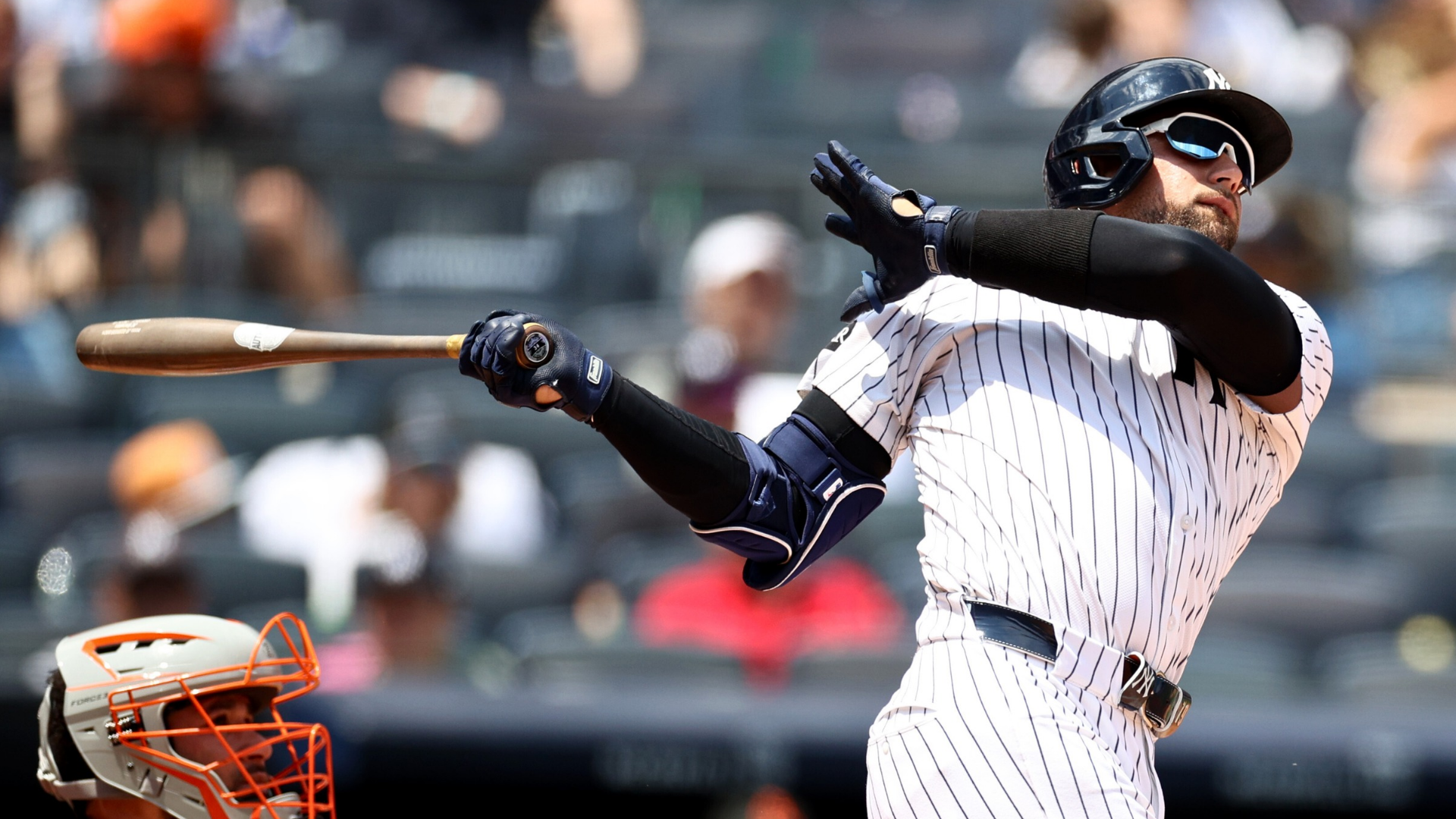
Getty
The main difference this time is that the torpedo bat is no longer treated as a novelty. The Yankees have turned it into a development tool, customizing bat profiles based on individual swing paths and tendencies.
For Escarra, the impact extends beyond raw power. The redesigned barrel gives him a larger margin for error, allowing him to stay in on pitches he would have missed before. Instead of empty swings, those borderline pitches are resulting in foul tips or extended at-bats, fundamentally altering the relationship between hitter and pitcher.
That subtle shift can have a significant impact. Hitters who can extend their plate appearances push pitchers deeper into counts, increasing the likelihood of mistakes. In a league where pitching continues to dominate, the ability to disrupt rhythm and timing gains a competitive edge.
The Yankees clearly understand this. Rather than abandoning the concept after last year’s buzz faded, they invested in its development behind the scenes. Now, with players like Escarra on board, the organization is starting to see results.
A More Controlled Approach Is Unlocking Escarra’s Upside
While the bat has dominated the conversation, Escarra’s approach at the plate has evolved just as dramatically. Last season, his limited opportunities forced him to adopt a reactive mindset, attempting to capitalize on sporadic at-bats. As a result, his production was uneven, and his stats did not accurately reflect his abilities.
This spring, his offensive game has been noticeably calmer. Escarra is no longer pursuing results. He’s focused on pitch selection, waiting for something he can handle, and relying on his swing to do the rest. That shift has allowed his natural strength to shine through without forcing the issue.
At the same time, he has worked to improve the defensive flaws that limited his impact last year, particularly his ability to control the running game. Improvements in his throwing mechanics and timing suggest that he is working to become a more complete catcher, rather than just an offensive player.
That combination may be significant for the Yankees. Even if Escarra starts the season as a backup to Austin Wells, his path to significant playing time is becoming clearer. If the offensive gains hold and the defensive improvements continue, he provides a level of two-way value that will be difficult to remove from the lineup.
More broadly, his success may indicate a larger trend within the organization. If the torpedo bat continues to produce results, it won’t be just a Yankees experiment for long. Baseball has always been a copycat league, particularly when it comes to small gains that can change outcomes over the course of a season.
What began as curiosity now appears to be a calculated advantage.
And if Escarra continues on this path, the Yankees will have not only developed a productive catcher, but they may have also contributed to the next significant shift in how hitters approach the game.
Like Heavy Sports’s content? Be sure to follow us.
This article was originally published on Heavy Sports
The post Yankees’ Catcher Revives Torpedo Bat, Showing Breakout Potential in 2026 appeared first on Heavy Sports.