For parents navigating family court in Cook County, falling behind on child support and other court-ordered payments can carry consequences that extend far beyond mounting debt.
It can mean going to jail.
Over the past decade, more than 2,500 people — nearly all of them men — have been locked up after Cook County judges found them in what’s called indirect civil contempt.
Most were detained for failing to comply with court-ordered payments to children or former spouses, according to Cook County sheriff’s records.
Those jailed spent an average of eight days in custody. But about 100 people were held for 50 days or longer. Of them, about 25 were locked up for more than 100 days, according to sheriff’s data from April 2016 to the end of March 2026.
One man, Steve Fanady, has been in jail for nearly four years.
A Chicago Sun-Times’ analysis of sheriff’s records exposes what some say is a punitive side of a system that civil rights advocates and some court observers say offers little legal help to those unable to afford a lawyer.
Unlike criminal defendants, people accused of violating support orders in civil court aren’t automatically entitled to legal representation even though they might face incarceration.
In Cook County’s sprawling domestic relations court system — which handles roughly 40,000 divorce and child-support cases each year — advocates estimate that at least half of the litigants come to court without a lawyer. Most are Black.
“Generally speaking, this is a bad system,” said Elizabeth Monkus, senior staff attorney with Chicago Appleseed for Fair Courts, an advocacy group focused on judicial reform.
Legal scholars say such cases point up the tension at the center of the child-support system: how to enforce court orders while recognizing the financial realities facing parents.
In Illinois, that support lasts until a child is 18 — 19 if the child is finishing high school. And parents can be required to pay for college, too.
Elizabeth Katz, a University of Florida law professor who has studied civil contempt in family courts, said the court system in the United States creates significant risks because people can be jailed without the procedural protections available in criminal cases.
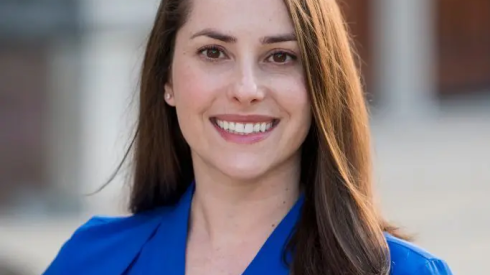
“Most of these people are incarcerated based on civil contempt, so they did not have access to a public defender,” Katz said. “That’s a problem in jurisdictions where courts have limited time and resources to dig in on whether the failure to pay is willful.”
“There’s a real risk,” she said, “that people are being incarcerated for reasons beyond their control and in a manner that is counterproductive.”
There are parallels to another legal process that’s drawn wide criticism: civil asset forfeiture. People who face having their cars or cash forfeited because cops suspect the property was tied to a crime also don’t have an automatic right to an attorney.
In criminal courts, people accused of anything from shoplifting to murder have the right to a public defender if they don’t have the money to pay a lawyer. Not so, though, in the civil court system.
Cook County has established a rule to connect low-income litigants in domestic relations cases with volunteer lawyers through bar associations when they face possible orders of indirect civil contempt for failing to pay their support.
But Monkus said those efforts have largely faltered. She said bar associations in Chicago are not recruiting lawyers to take cases involving involuntary civil contempt on a volunteer basis or maintaining comprehensive lists of attorneys available for appointment. Even when such lists existed, judges often did not rely on them, she said.
“It sounds like most of the judges were not making the appointments anyway,” Monkus said.
Chief Cook County Judge Charles S. Beach II didn’t respond to a request for comment.
In 2017, Cook County created a program in which hearing officers assist self-represented litigants with navigating family court proceedings. But those hearing officers are prohibited from giving legal advice.
Monkus describes the program as “generally successful” but insufficient to address the broader lack of legal representation.
“There is the sense that a lot of the failure to pay could be prevented if the parent had representation earlier in the process,” she said.
Most of the contempt cases differ sharply from the highly publicized examples of wealthy parents failing to pay large support judgments, advocates say.
“The issue is often, ‘Can I pay my rent versus can I pay my child support?’ ” Monkus said.
At the heart of whether someone is found in contempt for not paying is whether the failure to pay was “willful.”
Fanady has been held in jail for indirect civil contempt of court since June 28, 2022. The Illinois appeals court found his incarceration was proper because he was able to turn over $10 million in stock awarded to his former wife.

In a court filing, Fanady said it was impossible to award his former wife the stock she is seeking because the shares awarded in the judgment “no longer exist” and were determined to “belong to others.”
But the appeals court said he “had not met his burden to show that it was impossible to comply with the order.” He was “the architect of his own predicament,” the court said in a decision in June 2025.
Fanady, who now represents himself in court, couldn’t be reached for comment.
In another case, the same appeals court decided to free civil rights lawyer David Cerda, who had spent three months in the Cook County Jail as a result of not paying about $250,000 in support. He owed the money to the children he has with his ex-wife, former Fox 32 new anchor Roseanne Tellez.
Cerda “purged” his contempt several times when his father made payments of $5,000 on his court-ordered debt. But he testified he couldn’t pay the full amount of past-due child support because he owed more than $400,000 in taxes.
On Sept. 17, 2024, Cook County Circuit Judge Regina Scannicchio, presiding judge of the county’s domestic relations courts, had enough. She ordered Cerda jailed until he paid the full amount, dismissing his “defense of poverty and misfortune.” She questioned why he wasn’t using his law license to make the money he needed to pay his debt.
“It is unfortunate that you continue to make certain choices, Mr. Cerda, that have pretty dire consequences,” the judge said.

In a court filing in early December 2024, Tellez’s lawyers wrote: “David was given the opportunity to provide evidence regarding his supposed indigency and lack of funds during the course of a multi-day hearing on contempt and yet failed to do so.”
But just before Christmas of 2024, the appeals court ordered Cerda’s release from jail, finding that Scannicchio failed to adequately determine whether Cerda had the financial ability to comply with the order.
“The trial court abused its discretion by ordering him jailed without making a finding that he had the ability to pay the purge amount,” the court said.
There’s been no activity documented in the case since January 2025.
Cerda didn’t respond to a request for comment.
Some family courts have experimented with ways to divert parents from a course that might end with a contempt order and jail. “Parental accountability courts” have been operating in Georgia for 17 years. The aim is to help noncustodial parents find employment and job training and combat substance abuse so they can make a dent in their support debts without repeated contempt findings or jail stays.
According to state officials in Georgia, child-support collections have risen significantly after people “graduate” from these courts.
A similar accountability court in downstate Madison County was launched in 2016 — the first of its kind in Illinois. But it no longer exists in the county’s array of specialty courts. A court official there couldn’t explain why the court is no longer operating.
Katz said more study is needed to determine which approaches are most effective in helping parents meet their child-support obligations, especially in cases involving people who are barely scraping by.
“It’s incredibly hard to see how to fix the system,” she said. “The issue of how to financially support children with low-income parents has plagued courts and legislatures for over 100 years.”