A controversial “fraternity” of priests whose leaders were recently excommunicated by Pope Leo XIV — and that maintains a quiet presence in the Chicago area with a church in west suburban Oak Park and a priory on the Northwest Side — fashions itself as an authentic practitioner of Catholicism.
But the Society of Saint Pius X, perhaps known best for embracing the old Latin mass and other practices and beliefs often described as “traditionalist” or “conservative,” shares an unfortunate characteristic with many of the more mainstream Catholic religious orders: a history of alleged child sexual abuse.
While some of the troubles are known publicly — including in France where the media has reported on a priest from the society who was sentenced to 20 years in prison in 2023 for sexual misconduct against 27 minors — it’s unclear how widespread they’ve been within the international organization, often referred to as SSPX.
The group’s website decries the scourge of sexual abuse, saying it’s “concerned with the safety of all those who are members and guests of our various organizations and institutions. We are completely committed to protecting the safety of everyone who attends our chapels, schools, camps, outings, or events. Abuse of any kind is never to be tolerated under any circumstance.”
But the SSPX website doesn’t maintain a public list of credibly accused members in the United States like many religious orders currently in good standing, from the Augustinians, to which Pope Leo belongs, to the Carmelites, Dominicans and Jesuits, to which the late Pope Francis belonged.
SSPX leaders wouldn’t provide names or a tally of their alleged offenders when asked by the Chicago Sun-Times.
Many victims of the church’s decades-old abuse crisis say they support public disclosure of credibly accused clergy through church-based sex offender registries as a means of healing, and of ensuring better accountability from the church that was once much more mired in secrecy on this subject.
But popes have left the handling of such disclosures up to individual dioceses, which are church jurisdictions helmed by a bishop and based on geography, and individual religious orders, which usually follow in the mold of a saint and have their own leaders. SSPX is not technically a religious order — and even before the latest crisis it carried an “irregular” status within the broader church — but has similarities.
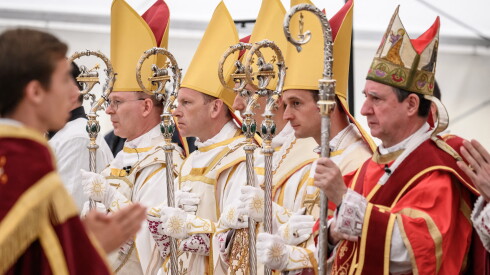
Italian sociologist Massimo Introvigne, who has studied the group, says: “They have had some cases of sex abuses but not more than other Catholic groups. Unlike in the mainline Roman Catholic Church, discussing sex abuse is not one of their priorities.”
SSPX leaders gave the Sun-Times a written statement saying it “does not give responses to the media on these questions. In addition to the canonical examination to which these cases are subject, as in any ecclesiastical society, the Society of Saint Pius X seeks to entrust all accusations on this subject exclusively to the judicial authorities, in accordance with the requirements of local legislation.”
“The Society of Saint Pius X cooperates fully with all judicial investigations, leaving it to the competent authorities to evaluate in detail the circumstances of each case and to pronounce judgment in accordance with the laws in force. In particular, the Society of Saint Pius X relies on them to evaluate the possible responsibilities of each person (physical or institutional), to draw the judicial consequences, and to ensure they are applied.”
A better understanding of accusations facing SSPX priests in the U.S. could still be coming. The Kansas Bureau of Investigation released a report on child sexual abuse in local Catholic dioceses in 2023, and indicated it was still looking into accusations involving SSPX, as is the Kansas attorney general.
How big is the Society of Saint Pius X?
The U.S. headquarters for SSPX — which counts about 700 priests and an estimated 600,000 followers around the world — is in Missouri, and the group also oversees a large congregation in Kansas.
A 2023 Illinois attorney general report on abusive Catholic clergy across the state didn’t mention SSPX.
The group runs a boarding school for boys in downstate Illinois, just south of Danville. It also oversees the Our Lady Immaculate Church at 410 W. Washington Blvd. in Oak Park, which the group bought in the early 1990s from a Presbyterian congregation. The group also has a priory in the Dunning neighborhood of Chicago in a building once owned by an order of nuns adjacent to St. Priscilla Parish.

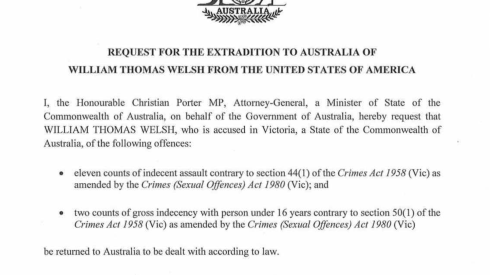
Locally, a former SSPX priest named William T. Welsh, who at least until recently had been living in the south suburbs, was the subject of an unusual federal court case in Chicago that began in 2020, as the government of Australia sought to have him extradited to face child sex charges.
An American, Welsh once ministered in Australia for SSPX, and authorities there charged him with 11 counts of indecent assault and two counts of gross indecency with a person under 16 years, court records show.
“Welsh was ordained a Catholic priest on 1 December 1985,” court records show. “In 1985 he was assigned as a collaborator in Hampton, Australia, until August 1986. After spending some time in different locations, Welsh was assigned as a prior in Hampton from January 1986 until July 1993.”
While in that suburb of Melbourne, he repeatedly sexually assaulted a female parishioner when she was between 12 and 15 years old, including at times on the church property, authorities allege.
The case was dropped in 2022 after Welsh’s attorney argued his health was too poor for extradition.

When SSPX learns of the Welsh allegations
Before that happened, court records show that a longtime SSPX leader based in Switzerland, Bishop Bernard Fellay, gave Australian police a statement saying the group became aware of abuse allegations made by an accuser against Welsh “some years after the alleged events.”
“During 2006, the church confronted Welsh about [NAME REDACTED] allegations,” according to a summary of Fellay’s statement in court records. “He met with Welsh in New Mexico, in the United States. Welsh denied the allegations that he sexually abused [NAME REDACTED.]”
“He does not have any note of his conversation with Welsh at that time.”
Church records shared with police say Welsh “took a sabbatical and left his post” in 1995 “without the agreement of his superiors.”
An SSPX spokesman says Welsh “left the Society in 1996 and that the authorities in Australia would be the ones to answer details regarding their side of this case.”

They either could not be reached or declined comment.
It’s unclear whether Fellay or anyone from SSPX went to police about Welsh and, if so, when. Court records say: “This case was reported to police on 1 October 2013.”
Another SSPX priest, the Rev. Francis Ockerse, told Australian police that in 1991 he had dinner with an accuser who “made a vague allegation of sexual misconduct by Welsh and then promptly left the room without elaborating,” court records say.
Ockerse “did not pursue the matter because he did not have sufficient evidence about the allegation. He does not recall the exact words used in the conversation and he did not speak with [NAME REDACTED] again. The conversation was never recorded because there seemed no reason to record it.”
“He forgot about the conversation until he was notified of a letter [NAME REDACTED] wrote in 2013 to Bishop Fellay.”
The accuser’s account of the conversation with Ockerse was more direct, according to court records that say: “The first person that she told about Welsh’s abuse” was Ockerse when she was 18 or 19 in the early 1990s.
Ockerse “was lecturing [NAME REDACTED] in the family home about not attending church” when the accuser got “so angry that she told him that the reason she was not attending church was because Welsh had abused her.”
The young woman “then walked out and Ockerse said nothing,” and “nothing was ever done about this.” At least until 2007, when she said she was asked by another priest to give a “deposition” in an effort to “defrock” Welsh, court records show.
Around 2008, victim’s parents learn of the abuse
In or about 2008 “she told her parents about the abuse by Welsh,” and they all spoke with Fellay and another SSPX leader in 2010 to discuss Welsh’s misconduct, records show.
The society has bristled at any suggestion that it’s covered up child sex abuse, even as some victims and other critics have portrayed that as standard practice. U.S. and European news reports in 2017 say current and former SSPX priests may have remained in public ministry overseas despite sex abuse claims.
The statement released by the society says that, “as a rule,” it “addresses every case of abuse brought to its attention. No case is simply concealed. On the contrary, we strongly encourage everyone to inform the judicial authorities and the Society of any cases of which they are aware.”
While many of the sex abuse allegations that arise these days in the broader church involve alleged misconduct that’s decades old, a number of complaints involving SSPX have been relatively contemporary — with one of its priests convicted in 2023 of molesting a girl in Minnesota.
A department of the Vatican — the church’s headquarters within Rome that’s overseen by Pope Leo — issued a decree earlier this month declaring that SSPX leaders, including Fellay, were excommunicated after they consecrated bishops without his authorization in an “act of a schismatic nature.”

The last four popes have all dealt with the Society of Saint Pius X. Pope Leo XIV, top left, recently excommunicated its leaders. Top right, late Pope Francis. Bottom left, the late Pope Benedict XVI. And bottom right, the late Pope John Paul II.
Alberto Pizzoli / AFP via Getty Images; Vincenzo Pinto / AFP via Getty Images; AP files
The group “claims it was compelled to ordain new bishops July 1 in Ecône, Switzerland, in order to guarantee to celebrate what they consider the true Mass,” according to a recent Catholic News Service article.
The reasoning from the group is “we had to do this for the sacramental needs of the faithful,” the SSPX spokesman said.
SSPX has since appealed the excommunication to the Vatican and portrayed the penalty as not only “unjust” but also flawed under the church’s own rules. The society argues the sanction is, or should be, on pause while the appeal is ongoing.
Top church officials didn’t return calls.
Fellay was involved in a similar controversy in 1988 when he and several others were made bishops by the society’s founder, Archbishop Marcel Lefebvre, without authorization from then-Pope John Paul II, who in turn excommunicated them all.

In an attempt to heal the rift with the group in 2009, then-Pope Benedict XVI reversed the excommunications.
But there was an uproar when it emerged that one of the new bishops, Richard Williamson, had made remarks questioning the existence of gas chambers in the Holocaust — among the reasons the Southern Poverty Law Center and others have described SSPX as anti-Semitic.
Fellay, at the time the society’s superior general, said Williamson’s remarks didn’t reflect the group’s teachings, and Williamson was removed from his position with a seminary. Williamson was expelled from SSPX in 2012.
The spokesman for the society says antisemitism is inconsistent with being Catholic and in no way part of the SSPX belief system.
SSPX’s beginnings
The society was formed in the early 1970s in the wake of the Vatican II council of the 1960s that was aimed at modernizing the worldwide church.

Among the reforms: mass was allowed to be offered in local languages, rather than strictly Latin as had been the practice for hundreds of years.
The priests in the liturgy also began facing the congregation, rather than with their backs to the pews.
And, the council softened its teachings on — and relations with — other religions, including the Jewish faith that, over centuries, was often demonized by the church.
The Catholic News Service article says: “There are two notable texts from Vatican II that focus on religious liberty, ‘Dignitatis Humanae,’ which recognizes a civil right to religious freedom, and ‘Nostra Aetate,’ which encourages dialogue with non-Christian religions while recognizing elements of truth and holiness within them.”
SSPX not only continues to celebrate the traditional Latin liturgy, it “rejects modernity as the fruit of Satan’s work” and regards “non-Catholic religions as ‘the work of the Devil,’ with which dialogue is both sinful and futile,” Introvigne says.

In contrast, Chicago’s top Catholic cleric, Cardinal Blase Cupich, has said Vatican II was instrumental in his decision to become a priest.
“Instead of a church that is closed in on itself, a self-referential church that is fearful of the world and modernity, we are to read the signs of the times and include all of humanity in our mission,” Cupich said in a homily last year, according to the Chicago Catholic newspaper.
“It is a posture that puts aside fear and self-interest and is open to benefiting from this engagement through inculturation and making our faith and worship more understandable and relevant to the needs of the world.”
Neither Cupich nor his aides would comment on SSPX.
Dated July 2, the Vatican decree on excommunication targets not just SSPX bishops but also followers, saying: “Clerics and lay faithful are warned not to adhere to the schism of the Priestly Society of Saint Pius X, because they would ipso facto incur the penalty of latae sententiae” — or automatic — “excommunication.”
A church website says of excommunication: “Properly understood in this way as a medicinal penalty, excommunication certainly does not expel the person from the Catholic Church, but simply forbids the excommunicated person from engaging in certain activities… in the life of the Church until the offender reforms and ceases from the offense.”