Cook County is known as the wrongful-conviction capital of America.
The National Registry of Exonerations includes 215 murder cases that have been cleared here since 1989 — far more than in any other U.S. county. Brown University sociologist Nicole Gonzalez Van Cleve is out next week with a book about them called “Crime Fictions.” Van Cleve writes that wrongful convictions stem from something more pernicious than shoddy law enforcement.
She discussed her findings in a recent interview with WBEZ, which has been edited for clarity and length.
You began your research with a hypothesis: The main problem behind wrongful convictions is the prevalence of false confessions. What is a false confession?
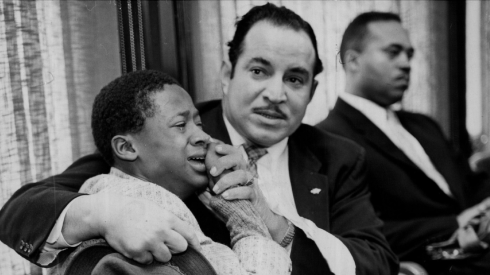
Nicole Gonzalez Van Cleve: False confession is just admitting to a crime that you didn’t do. Most people think that could never happen to them but, what they don’t realize, is that the police have techniques and ways of making it happen. One is the tacit threat of violence. But it’s more about psychological manipulation, isolation and just literally breaking people. The people most vulnerable to false confessions include children. We can start with Lee Hester in 1961. At age 14, he was profiled at school for killing his teacher, but he was learning disabled. He was very poor and, when the police took him from school, they isolated him in a jail cell, took his clothes, gave him a gown, and took his toys. And they used Black officers as lures to make sure he felt comfortable, but then broke him. The Black officers would say that the white officers were going to throw his head through that wall: “You better tell them what they want you to say.” This child really endured so much and he just admitted guilt to get out of the room. And many of the targets of these false confessions are disabled. Some have limited reading ability. They still were able to place words in their mouths and make them sign these confessions to make them look all real.
Of the 215 exonerations in Cook County murder cases, 113 involved false confessions. You found that some of those confessions, on their face, were preposterous. Some defendants confessed despite solid alibis — even evidence they were in police custody during the crime. And you wrote that some of the defendants were young children.
Van Cleve: Yes. Romarr Gibson was only 7. He was nonverbal. In 1998, Chicago police officers questioned him and his friend, Elijah Henderson, who was only 8. It was about the sexual assault and murder of an 11-year-old girl named Ryan Harris in Englewood. At first, these officers treated Romarr and Elijah as witnesses. But they isolated them from their families and interrogated them in close proximity. The lead detective was a guy named James Cassidy. He was a specialist. He held Romarr’s hand. He told him things like, ‘We’re all friends here. You can tell me anything.’ And this nonverbal child supposedly admitted to the murder and sex crime, which was absurd because it was years before he would hit puberty and he had these profound disabilities. But the boys faced a murder charge for weeks — until a lab analysis confirmed that semen had been found on the girl’s clothes. It couldn’t possibly have been from these pre-pubescent boys.
Eileen O’Neill Burke, elected Cook County state’s attorney in 2024, worked in the office in the 1990s. Back then, she prosecuted a murder case that involved Cassidy, that same detective. She argued the killer was a 10-year-old. Because he was so young, officials called him by the initials A.M.
Van Cleve: Yes, A.M. was a young boy. His neighbor, a woman named Anna Gilvis, was murdered. A.M. wanted to be helpful to police, and that actually made him vulnerable. We had asked kids to help the police all the time, but the officers turned on this little boy. They brought him into an interrogation room, and Detective Cassidy led the way, doing like he did to Romarr in that later case, holding A.M.’s hands and saying that, if he just admitted his guilt, the police would forgive him the way God would forgive him. Then he promised A.M. that he could go back to a birthday party if he just said what the police wanted him to say. This was a horrendous manipulation of a child that was so vulnerable. But, ultimately, Eileen O’Neill Burke supported this detective. She said Cassidy was “the nicest, slightest man,” and “that’s why they have him interview kids.”
As you studied wrongful convictions in Cook County, your hypothesis — that the main problem was false confessions — didn’t seem to be holding up. In your book, you wrote that one case in particular altered your thinking.
Van Cleve: Yes, it was the George Jones case. He was a Black, middle-class 18-year-old in Roseland. He was known as Bookworm because he was so studious and he looked like Clark Kent. He was the kind of kid who wore a tweed coat and glasses. And his father was a Chicago police officer. And when police officers didn’t have a suspect in the murder of Sheila Pointer, they pinned the case on George Jones.
They had exonerating evidence and they buried it so it couldn’t be found. “Street files” like these were a type of bureaucracy that kept the system moving efficiently, so they could wrongfully convict more and more people. This case also revealed that race was a factor in who was being targeted for wrongful conviction. George had all the middle-class protections. He was an honor student and a track star. His dad was a Chicago police officer. And what you see in these hidden documents was that the police were going after George even though they had enormous amounts of evidence showing he was not the perpetrator. Worse yet, in those secret files, you can see the Chicago police disparaging Black victims and Black families. That is the crushing piece of it: Here was a good Black officer doing what he’s supposed to be doing, and his son is being targeted by the Chicago Police, his own employer.
If the fundamental problem behind these wrongful convictions is institutional racism, not just sloppy policing, how about the fact that roughly 70% of Chicago murder victims are Black, and presumably most of the perpetrators are too. Wouldn’t we expect wrongful convictions to mostly affect Black defendants?
Van Cleve: One of the most important things is that we don’t think about wrongful conviction as a problem with public safety. In all these cases, when there was a wrongful conviction, the killer was free, the rapist was free. These were violent people who could continue perpetrating. So, we need to start thinking of wrongful conviction as an issue of public safety because, every time the police got it wrong, there was a perpetrator still out there, victimizing other people.