Hockey fans and everyday investors could soon trade on the performance of the Blackhawks or other NHL teams through futures contracts.
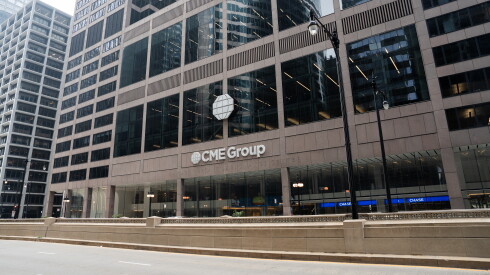
Chicago-based startup FutureSports announced a landmark deal last week with the NHL that would use official game statistics to establish financial indexes on the league’s 32 teams — a first in finance and sports. It comes on the heels of FutureSports’ partnership with Loop-based CME Group to offer sports futures contracts. CME operates the world’s largest futures exchange.
Futures contracts, tied to the value of indexes, allow investors to buy or sell an asset at an agreed price by a specific date. It also allows traders to hedge risks.
For decades, futures contracts have primarily been associated with agriculture products, like corn and soybeans, or energy commodities, such as oil and natural gas, as well as stock indexes like the S&P 500. Futures even got the Hollywood treatment with the 1983 film “Trading Places,” when Dan Aykroyd and Eddie Murphy’s characters cashed in on orange juice futures, and over 20 years later, inspired a federal provision nicknamed the Eddie Murphy Rule.
FutureSports and CME’s new offering means if the Blackhawks play poorly, for example, a season ticket holder could take a short position on the team’s index to try and recoup some of their ticket investment losses. Corporate sponsors, which spend millions annually on sports deals, could buy hockey futures to limit their exposure if a key athlete gets injured or the team just fails to meet expectations.
The companies highlighted other potential market participants like garage and parking lot operators, retailers and even the sports franchises.
“We believe we’ve hit a chord with sports as the underlying asset class or sports performance,” FutureSports co-founder Rhett Dinsdale said. “It gives people and the financial community access to that sports statistical performance that’s never existed before.”
CME plans to list the futures, pending regulatory review, on Sept. 28 — a day before the puck drops in the NHL season opener.
How it works
The indexes will open at 7,500 points and fluctuate throughout a game, based on real-time statistical data. FutureSports plans to share every stat category and their correlation on the index, before trading starts next month.
“It all comes down to education,” FutureSports co-founder Leigh Taylforth said. “It will be a slow and deliberate approach.”
Unlike contracts on prediction markets, futures focus on asset price changes and require margin, or collateral, of several thousand dollars. Prediction market contracts are yes-or-no wagers on whether a real world event will happen and typically trade between $0.01 and $1.00.
CME said the sports futures will be available in standard-sized contracts at 10 times the value of the underlying NHL indexes, while microsized contracts geared for retail traders will be 1/10 the value of those indexes. And participants can trade around the clock.
NHL spokesperson Jen Neziol said players, coaches and staff will be prohibited from buying or selling sports futures.
The league will only provide FutureSports underlying statistics and isn’t involved in the “determination, calculation or governance of the indexes,” according to a news release. It’ll also establish “layered monitoring and other protections” to support the integrity of games and related financial products.
The Blackhawks didn’t respond to requests for comment.
Trading futures is complex and its investors are savvy. Even retail traders, who buy for themselves and often make smaller trades, use similar financial analysis tools as institutional investors.
“Anyone considering trading them should understand the mechanics, costs and risks first and seek professional guidance as appropriate,” said Joseph Cusick, senior vice president and portfolio specialist at Calamos Investments in Naperville. “Futures traders can experience rapid gains or losses because of margin requirements.”
The margin is typically 3% to 10% of the total contract value. Institutional investors will be required to front thousands of dollars for their sports futures trades, while the margin for microsized contracts will be much smaller.
FutureSports said it also plans to create indexes tied to select NHL athletes, with CME rolling out associated contracts based on those indexes. It’s also targeting partnerships with other leagues, though an index for the Bears and other NFL teams won’t happen this season, Taylforth said.
Matthew Rice, chief investment officer at Goldstone Financial Group in Oakbrook Terrace, expects sports futures to draw customers from retail trading platforms like Robinhood but winning over institutional investors, which comprise 94% of CME’s trading volume, is another challenge.
“There has to be some sort of structural reason, like a positive embedded rate of return, to come out of it before we can expect it to become more institutionalized,” he said.
‘Started from scratch’
FutureSports started in 2022 by Dinsdale and Taylforth, who were living in Australia. They traveled to Chicago regularly to meet their legal team and became enamored with the city’s welcoming vibe, professional talent and sports culture — key factors that led them to relocate the business here in 2023.
“We’ve always been familiar with Chicago as the home of derivatives globally,” Dinsdale said. “The access to talent here is second to none. And Chicago is a great sports town.”
Both have extensive career experience in derivatives trading for market makers, investment banks and hedge funds.
“We actually came out here with no contacts within the sports industry,” Taylforth said. “So we started from scratch in sports.”
The duo relied on introductions and found an immediate reception pitching sports leagues and eventually investors, like Red Sox owner John Henry, a pioneer commodities futures trader for over 30 years.
”John Henry was probably the easiest pitch,” Dinsdale said. “He revolutionized commodities markets from quant trading.”
Their pitch has also attracted financial backers such as Cubs ownership’s Marquee Ventures, Elysian Park Ventures, the investment arm of the Dodgers ownership group, platforms like Robinhood and financial firms, including CME.
Good odds
It’s not the first time a Chicago company has proposed sports futures.
In 2020, Eris Exchange pitched sports futures that essentially mimicked sportsbook bets, contending casino operators and other parties economically impacted by NFL games should be allowed to hedge their positions.
But the Commodities Futures Trading Commission voiced concerns that the trades amounted to sports gambling, prompting Eris to withdraw its proposal. The five-member commission, a sister agency to the Securities and Exchange Commission, regulates the derivatives and prediction markets.
Cboe acquired Eris, later rebranded Cboe Digital, in 2022 but leveraged the takeover to launch new digital asset products, including listing and clearing a suite of bitcoin and ethereum futures.
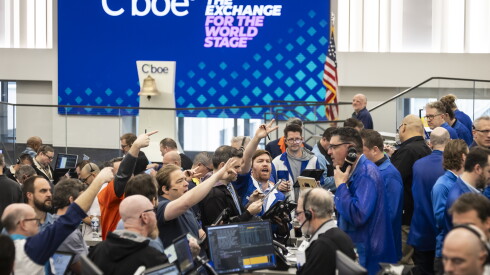
“While much of the prediction markets space has been built around novelty or sports-based contracts, Cboe is taking a different path, focusing on financial event contracts that deliver real investment or hedging volume,” Cboe spokesperson Angela Tu said.
FutureSports and CME’s proposal must still be reviewed by the CFTC, which can deny, approve or take no action. But they’ll likely have an easier path to approval.
CFTC Chairman Michael Selig, nominated by President Donald Trump, has been changing the regulatory landscape for everything from cryptocurrency to prediction market platforms like Kalshi and Polymarket, taking a friendlier approach.
And he has been the agency’s lone decision-maker since December, following a series of departures.
Peter Sanchez Guarda, who served 22 years in various leadership roles at the CFTC, expressed concern and said the agency has “had an inconsistent record regulating contracts.”
“There’s no more dissenting voices,” he said. “There’s no more negotiation and backroom horse trading, which happened a lot.”
Growth of retail traders
Sports futures is the latest effort by CME to capture more retail traders, a segment that has exploded the last few years and transformed the global financial landscape.
CME now has more than 130 retail broker partners — like Robinhood and Chicago-based EdgeClear — pushing products to retail traders. The exchange also introduced several smaller contract options tied to gold, oil and other commodities, making them more affordable and accessible.
Retail has been the company’s fastest-growing client segment for the last decade. Last year, CME set records in new account openings and retail participants, which topped 650,000.
“We’re constantly trying to introduce those products that are more appropriately sized for retail, and that’s been a pretty successful strategy,” said Tim McCourt, senior managing director and global head of equities, FX and alternative products at CME.
The life cycle of CME’s retail traders is also changing, with many executing their first trades in futures rather than starting out with stocks or exchange-traded funds.
“We’re no longer necessarily waiting for them to graduate into becoming a futures trader,” McCourt said.
Retail trading’s growth — fueled by a confluence of cultural and economic factors — took root during the pandemic, with stimulus checks helping to fund some personal investment hobbies.
New York-based exchange operator MEMX estimates retail investors now account for 30% to 37% of daily trading volume.
Exchanges, like CME and Chicago-based Cboe Global Markets, want their business.
“We’ve spent years educating investors on the utility and versatility of options [contracts], and that’s reflected in the sustained growth we’re seeing across the market,” JJ Kinahan, Cboe’s head of retail expansion and alternative investment products, said in an email.
Cboe’s second quarter saw the average daily volume for retail-traded options that expire at the end of the trading day hit 3.1 million, up 364% from 668,000 a year earlier.
These traders are also getting younger.
NinjaTrader, exclusively serving retail futures traders, said more than 36% of its customers are under 35. A year ago that demographic accounted for 28.4%, CEO Marty Franchi said. The Loop-based company counts nearly 4 million annual users.
The percentage of its traders aged 18 to 24 have doubled in the last few years.
“We’re seeing the age of the consumer get younger, as there’s more access and innovation in favor of retail,” Franchi said.