Insight Health Systems is interested in rescuing two closed Chicago-area hospitals, even as its hospital in Chicago appears to be struggling.
Since buying historic Mercy Hospital in 2021 for $1 — keeping it from closing — and changing its name to Insight Hospital and Medical Center, the hospital has consistently lost money, according to its tax returns. Located in Bronzeville, Insight had a nearly $30 million loss in 2024, its most recent records show.
And Insight Hospital has received about $50 million in advances from the Illinois Department of Healthcare and Family Services to help keep the doors open since it bought Mercy.
As recently as 2024, Insight Hospital faced a “financial emergency,” according to its advanced payment plan agreement WBEZ and the Chicago Sun-Times obtained through a public records request. The hospital ran into trouble with a contractor trying to upgrade its outdated billing system, causing “high levels” of unpaid bills from patients and health insurers. Add high labor costs and materials, and Insight faced potentially “significant cash flow problems,” the state found.
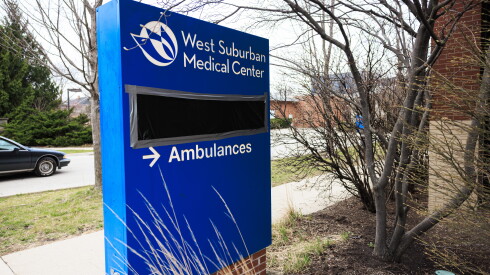
These records raise questions about how Insight Health Systems can afford to reopen and operate two more hospitals — West Suburban Medical Center in Oak Park and Weiss Memorial Hospital in Uptown. Their owner suddenly closed West Suburban in March and Weiss in August 2025, forcing patients to travel farther for care to hospitals already stretched thin.
Insight Hospital, West Suburban and Weiss are all safety-net hospitals, which are often the fabric of low-income and immigrant communities. They typically don’t make much money and struggle to make ends meet.
An Insight Health Systems spokesperson declined an interview request, responding with a written statement that said the health system “has consistently demonstrated the commitment and willingness to step in where it can help close gaps in access.”
Insight Hospital is an independent nonprofit and would not be managing West Suburban, the statement said. Its parent company would. “Questions premised on Insight’s financial role in West Suburban’s reopening are therefore misplaced,” the statement said.
But the top executive at Insight Hospital — CEO Atif Bawahab — is chief strategy officer of Insight Health Systems, a for-profit with several facilities in Michigan, according to their websites. Insight Hospital’s board chairman and two other board members are also executives with the parent company, including Insight Health Systems’ chief financial officer.
Insight Health Systems’ interest in taking over West Suburban and Weiss emerged in a messy divorce between the closed hospitals’ owners. The proposed settlement agreement says Insight essentially would buy the hospitals for $1 and manage them. State regulators would need to approve any ownership changes.
Insight Hospital has a small footprint in Chicago. The hospital treats mostly elderly and low-income patients. The majority are Black, public health data shows. In 2024, Insight had more than 1,000 employees to staff a hospital that, at its busiest time that year, treated about 80 patients, records show. That’s even though the hospital is licensed by the state to treat about five times more people, records show.
Shannon Bennett, executive director of the Kenwood Oakland Community Organization, known as KOCO, is among several community leaders, patients and former employees calling for West Suburban and Weiss to reopen with a responsible leader — and for Gov. JB Pritzker and state lawmakers to help.
KOCO was a fixture at rallies to save Mercy Hospital from closing. Now, Bennett sees how Insight is a resource in the community. He’s used the emergency room twice.
Told of Insight Hospital’s financial struggles, Bennett suggested the state support Insight to save two more hospitals and to be transparent about the process.
“We always get told why it can’t work or why something won’t work,” Bennett said. “Let’s lead with the possibility of a Black community, a very integrated community in Uptown, having the opportunity to think through this with the people who normally don’t engage them.”
He sees Insight as a willing partner while also calling for vetting them to take on more.
He suggested the state offer debt relief for whoever operates West Suburban and Weiss. Their owner closed the hospitals owing the state more than $100 million.
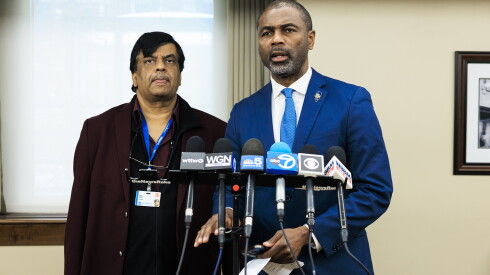
A spokeswoman for Pritzker declined an interview. State Rep. La Shawn Ford, D-Chicago, said he hasn’t heard of the state giving Insight money to take over West Suburban and Weiss. Other safety-net hospitals want state help, too, Ford said.
“Do we allow for them to fail?” he said of Insight possibly taking on two more struggling hospitals. “Or do we protect what’s open?”
To reopen the two hospitals, Insight would need to woo the community as well as nurses and doctors who might already have found new jobs. Leaders will need to figure out how to survive.
Big cuts to Medicaid public health insurance for people who are poor or have disabilities are coming next year. More than 400,000 people could lose coverage — about half of them live in Cook County. That’s less money for hospitals that treat them.
Kristen Schorsch is a senior reporter at WBEZ covering public health.