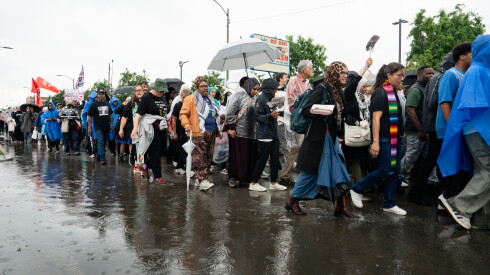
Bernice King looked out into the crowd of rain ponchos and umbrellas Saturday morning, echoing the calls of her father, who stood in the same spot 60 years before.
The Rev. Martin Luther King Jr. and other activists marched to Marquette Park in August 1966 to protest redlining and housing discrimination that spread in Chicago in the decades after droves of Black people moved north and settled in the city during the Great Migration. In Marquette Park that day, King and his associates were met with mobs of angry white people hurling rocks and Molotov cocktails.
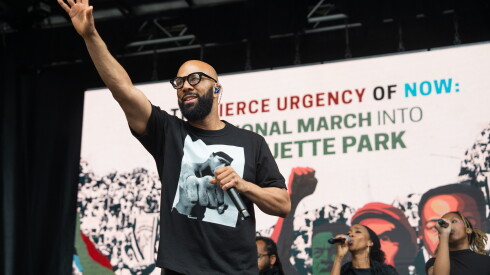
This year, Bernice King joined Mayor Brandon Johnson, Chicago-born rapper Common and hundreds of marchers to commemorate the 60th anniversary of the march, reiterating that the fight for racial justice continues decades later.
Bernice King reminded the crowd of what her dad had dubbed the “triple evils” of poverty, racism and militarism.
“[Those] are still alive, still mutating, still menacing our communities,” she said. “They hide under new disguises, they show up in policies that punish the poor and systems that surveil the vulnerable, in structures that sacrifice humanity for profit.”
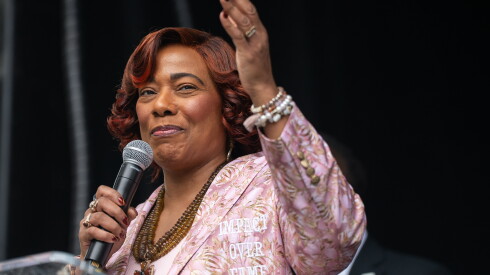
Bernice King, daughter of Martin Luther King Jr., speaks at Marquette Park after marching in Chicago Lawn, Saturday, Aug. 1, 2026, where people gathered to commemorate the 60th anniversary of Martin Luther King Jr.’s Marquette Park march against segregation. | Pat Nabong/Sun-Times
Pat Nabong/Sun-Times
Hundreds of marchers braved the drizzly morning, congregating at 63rd Street and Kedzie Boulevard before making their way south to the park to the tune of protest songs, chants and upbeat horns and drums. Some wore shirts reading “Sixty years later, we’re still marching,” while listening to speakers hype up the crowd with stories of Black resilience and calls to action.
Common performed with singer Mumu Fresh and a group of backup singers, bringing a gospel tone to the gathering as people cheered and raised their fists in the crowd.
In her remarks, Bernice King spoke of being a toddler when her family lived in Chicago in the 1960s, begging her parents to let her march with them. She addressed the crowd and implored them to keep addressing injustices, calling out President Donald Trump’s administration and federal immigration enforcement for heightened arrests and deportations, police brutality against people of color and voter suppression.
“We’re living in a time when human dignity is being dismissed, when truth is being twisted, when authoritarianism is out of control, when democracy is being deliberately undermined,” she said. “And yet in the midst of this trembling, we stand on the ground where my father once stood.”
Wearing a pink blazer embroidered with the words “Impact Over Fame,” she also stressed the strategy of nonviolence in fighting against oppression, saying it is the “discipline that keeps us from becoming what we oppose.”
Johnson said Chicago still faces many of the challenges it did in the 1960s when it comes to fair access to healthcare, housing, transportation, education and well-paying jobs, and said the “ultra-rich” need to be taxed to fund more public programs. He also spoke of his administration’s moves to increase affordable housing, add youth jobs and protect education initiatives that have been under attack by the federal government, like the Chicago Public Schools’ Black Student Success Plan.
“We’re building Chicago and we’re building a nation in a democracy that belongs to everyone,” Johnson said.