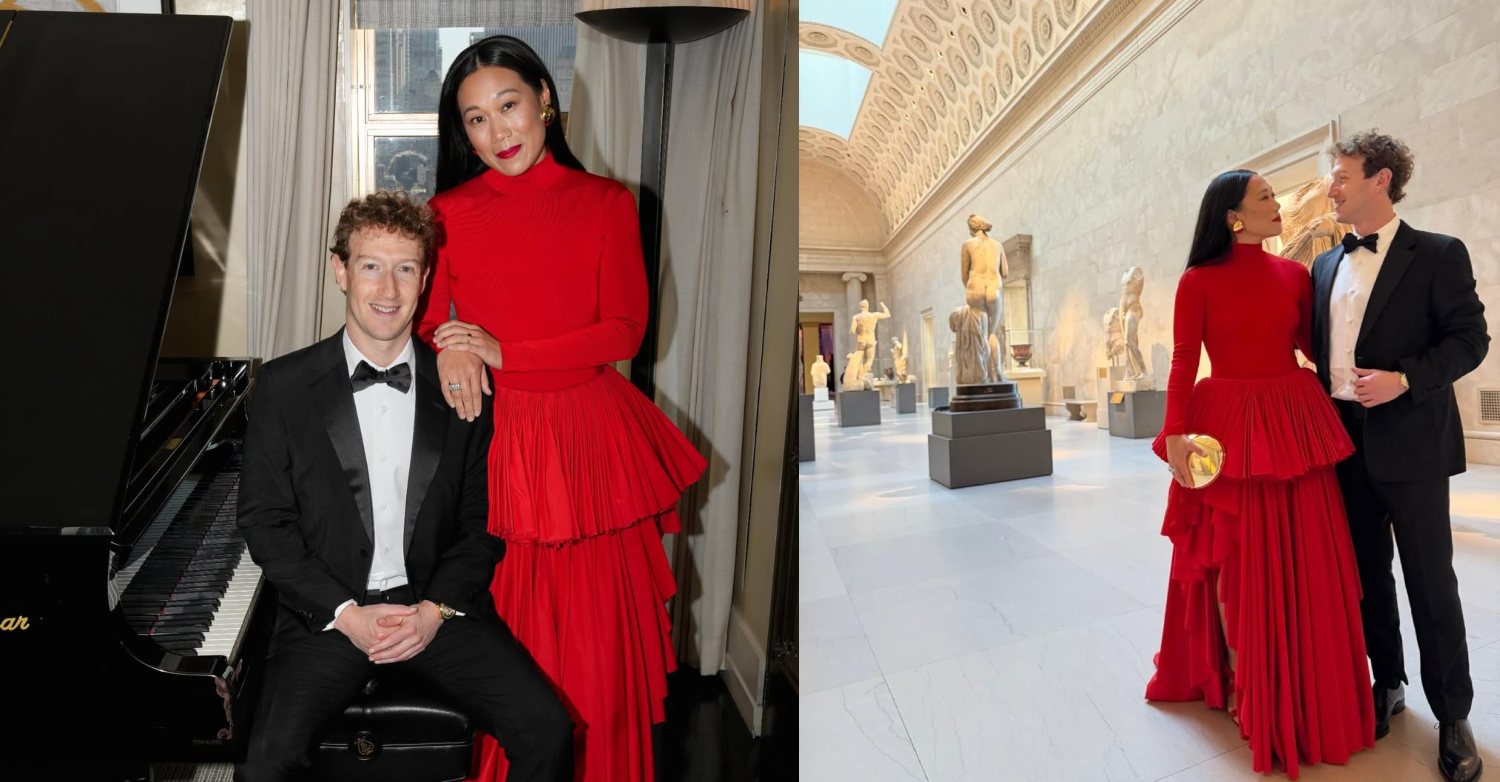
With fellow tech billionaire Jeff Bezos footing the bill, it seems Human Beaker Mark Zuckerberg felt safe enough to come out for his very first Met Gala last week. Of course he wasn’t brave enough to walk up the front steps — lest he get booed again — but he and wife Priscilla Chan were snapped inside, Zuck in a tux and Chan in a blood-red gown (I leave it you to interpret which work of art she was invoking). So Zuck being in NYC Monday night means he was local the next day when a new class-action lawsuit was filed against him in the Southern District of New York. I love it when the timing works out! Five top publishers, along with author Scott Turow, are suing Meta for, what else, mega copyright infringement when Zuck authorized what they allege to be grand theft scale pirating of written works off the internet, all to train Meta’s generative AI.
Author Scott Turow and the publishers named as plaintiffs in the lawsuit — Hachette, Macmillan, McGraw Hill, Elsevier and Cengage — allege that Meta and Zuckerberg “illegally torrented millions of copyrighted books and journal articles” and “downloaded unauthorized web scrapes fo virtually the entire internet.” Meta then copied the stolen material many times over, the plaintiffs allege, to train the AI system — effectively engaging “in one of the most massive infringements of copyrighted material in history.”
The case, filed in the U.S. District Court for the Southern District of New York, is the latest in a string of lawsuits brought by publishers, authors, artists, photographers and news outlets aimed at forcing tech companies to compensate them for using their works to train their AI models. The plaintiffs argue in the lawsuit that the AI model’s ability to quickly produce knockoffs and summaries of copyrighted books threatens the livelihoods of publishers and authors.
A Meta spokesperson said in a statement that the company would “fight this lawsuit aggressively.”
“AI is powering transformative innovations, productivity and creativity for individuals and companies, and courts have rightly found that training AI on copyrighted material can qualify as fair use,” the spokesperson said.
The publishers’ complaint states Meta distributed millions of copyrighted works without authorization and without compensating authors or publishers, claiming that Zuckerberg “personally authorized and actively encouraged the infringement.” They also claim that Meta removed copyright notices and copyright management information from the works used to train the AI model, known as Llama.
Tuesday’s lawsuit mirrors claims made against the company Anthropic, which was sued by authors over its use of their work to train its AI tools, such as its popular chatbot Claude.
The Washington Post reported earlier this year that the AI company spent tens of millions of dollars to acquire and slice the spines off millions of books, before scanning their pages to feed more knowledge into the models behind its products. The details of the effort, known as Project Panama, were outlined in documents unsealed in a now-settled case brought by authors against Anthropic.
Court records in the settled case suggested that tech companies didn’t see it as practical to gain direct permission from publishers and authors to use their work. Instead, Anthropic, Meta and other companies found ways to acquire books in bulk without the authors’ knowledge, court filings allege, including by downloading pirated copies.
WaPo is citing Anthropic, not Meta, when they say the company “spent tens of millions of dollars to acquire and slice the spines off millions of books,” in order to teach their AI models. But I imagine Meta has spent a comparable fortune on this thievery, and all I can think is: my word, if only we were spending that kind of money on HUMAN education. Of course the Meta legal team says they’ll be fighting back, but claiming their actions “can qualify as fair use,” well, the “can” is doing a lot of heavy lifting there. (Not to mention that other judges have ruled that AI companies can be sued for copyright infringement.) The US Copyright Office defines fair use as “a legal doctrine that promotes freedom of expression by permitting the unlicensed use of copyright-protected works in certain circumstances.” Individual uses are judged by certain criteria to determine fair use vs ripping off, and once you start reviewing the criteria, Meta’s arguments start malfunctioning as quickly as their own AI glasses. Also, I can’t help but feel that the documented great lengths Meta went to to obtain the copyrighted works illegally, just serves as further proof of the use not being fair from the get-go.
Here’s my verdict, sartorial and otherwise: the boring-ass tux Zuck trotted out for the Met Gala didn’t really fit him or the occasion, but “perennial defendant” is a look that suits him very well.
Photos via Instagram and credit: Getty