Earlier this month, the Archdiocese of Chicago launched an investigation into a decades-old child sexual abuse allegation against the Rev. Michael Pfleger, the longtime pastor of St. Sabina Church in Auburn Gresham.
It was the fifth such accusation brought against Pfleger in five years, and the investigation remains ongoing. The archdiocese found the four previous allegations to be unfounded. The latest allegation has brought renewed attention to Pfleger, whose decades of ministry and community activism have made him a prominent South Side figure. It has also prompted parish leaders to call for changes to how the archdiocese handles allegations against priests.
Here’s what to know.
What is the current allegation?
The archdiocese opened the latest investigation July 11. It stems from an allegation that Pfleger sexually abused a girl who was a student at St. Sabina sometime between 1993 and 1995.
Pfleger, who has strongly denied the accusation, has been removed from active ministry while the Archdiocese of Chicago’s Independent Review Board investigates the claim.
The archdiocese has not released additional details about the allegation, but a spokesperson said this week that the investigation “remains ongoing [and] when we have updates, we will share them.”
The allegation was also reported to law enforcement, according to Cardinal Blase Cupich.
Who is the Rev. Michael Pfleger?
Pfleger, 77, has led St. Sabina Church since 1981, when he became the youngest pastor in the archdiocese.
Beyond his role as a priest, Pfleger is known for his anti-violence work and advocacy for racial and economic justice, making him a prominent civic figure beyond St. Sabina, a predominantly Black Catholic parish.
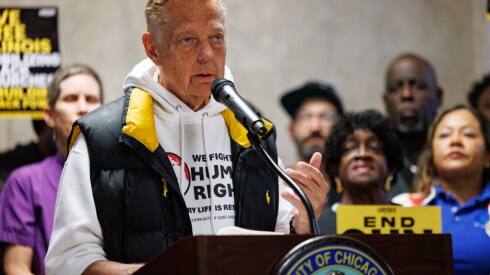
In addition to serving as a place of worship, St. Sabina has also been a hub for community organizing, youth programs and social justice efforts on the South Side.
Pfleger has often brought together religious leaders, activists and elected officials for public demonstrations and community initiatives. He was closely connected to the late Rev. Jesse Jackson, the Chicago civil rights leader and founder of the Rainbow PUSH Coalition. The two developed a friendship and worked together on issues involving racial justice and violence prevention.
What is the St. Sabina parish saying about this?
St. Sabina leaders say they support investigating allegations of child sexual abuse, but they argue the archdiocese’s current process unfairly harms accused priests and their communities before the investigations are complete.
On Friday, parish leaders delivered a letter to the archdiocese demanding reforms to its abuse investigation policies.
The letter argues that the current process can damage priests and their communities before investigations are complete, and calls for what they describe as a more balanced approach that protects survivors while providing greater due process for accused clergy.
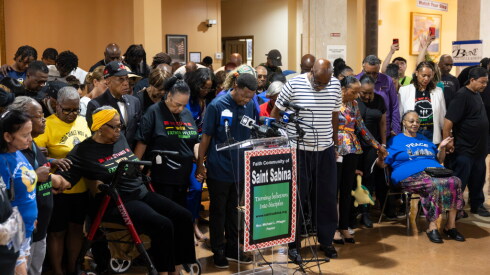
Among their requests, the St. Sabina leaders are calling for:
- More transparency about investigation timelines and procedures
- Quicker resolutions to cases
- Independent review of allegations
- A tiered suspension policy that would consider factors such as the age of an allegation and whether there is an ongoing risk to children
In their letter, St. Sabina leaders said the current process “fails to differentiate circumstances where there is a need for immediate removal” because of ongoing risks to children “from circumstances where there is no reasonable concern that any alleged abuse is ongoing, but rather, the allegation is about abuse allegedly occurring decades ago.”
Why does the archdiocese remove priests during investigations?
The archdiocese’s policy of removing priests from ministry while abuse allegations are investigated is rooted in a broader shift in how Catholic dioceses respond to accusations of clergy sexual abuse.
After decades of abuse scandals and criticism that church leaders failed to act quickly enough when allegations surfaced, the Archdiocese adopted a policy of removing accused priests from ministry while allegations are reviewed. The archdiocese says the action is a precautionary step intended to protect children, allow investigations to proceed without interference and maintain public trust.
In the early 1990s, the archdiocese began formalizing its investigations into abuse allegations, including removing priests from active ministry amid investigations.
In 2002, the archdiocese adopted the “one-strike” rule that permanently removes priests after one substantiated allegation of child sexual abuse.

The archdiocese’s stated process is to report allegations of child sexual abuse to civil authorities, remove the accused priest from ministry and investigate the claim. The Independent Review Board then advises the archbishop on issues including whether there is a risk to children and whether a priest is fit to return.
St. Sabina leaders argue that the policy can unfairly damage an innocent priest’s reputation and their community before an investigation is complete, especially in cases involving decades-old accusations. The archdiocese maintains that temporary removal is necessary because of the church’s past failures to respond aggressively enough to abuse allegations.
“We are committed to following the same thorough and impartial process with everyone so accused,” a spokesperson for the Archdiocese of Chicago said. “Only by doing this can we be assured of fairness to all concerned.”
What happened with Pfleger’s previous investigations?
The first major investigation was in 2021, when two brothers alleged that Pfleger sexually abused them decades earlier when they were children. A third person later came forward with a similar allegation. Pfleger denied the accusations and was removed from ministry until months later, when Cupich reinstated Pfleger, saying the review board found there was insufficient reason to suspect Pfleger was guilty of the allegations.
In 2022, Pfleger was again removed from ministry after another child sexual abuse allegation dating back decades. Pfleger denied that allegation and, after another review, the review board said the allegation was not substantiated and Pfleger was reinstated.
St. Sabina leaders have pointed to those previous allegations, each of which the archdiocese deemed unfounded after it removed Pfleger for months at a time, as a reason they believe the process needs to change.
What happens next?
Pfleger remains removed from active ministry while the archdiocese’s investigation continues. The Independent Review Board will make a recommendation to Cupich about whether Pfleger can return to ministry.
Meanwhile, the Rev. Thulani Magwaza is serving as lead pastor of St. Sabina Parish.
St. Sabina leaders also have said they will give archdiocese officials time to review their concerns laid out in their letter before deciding on their next steps.