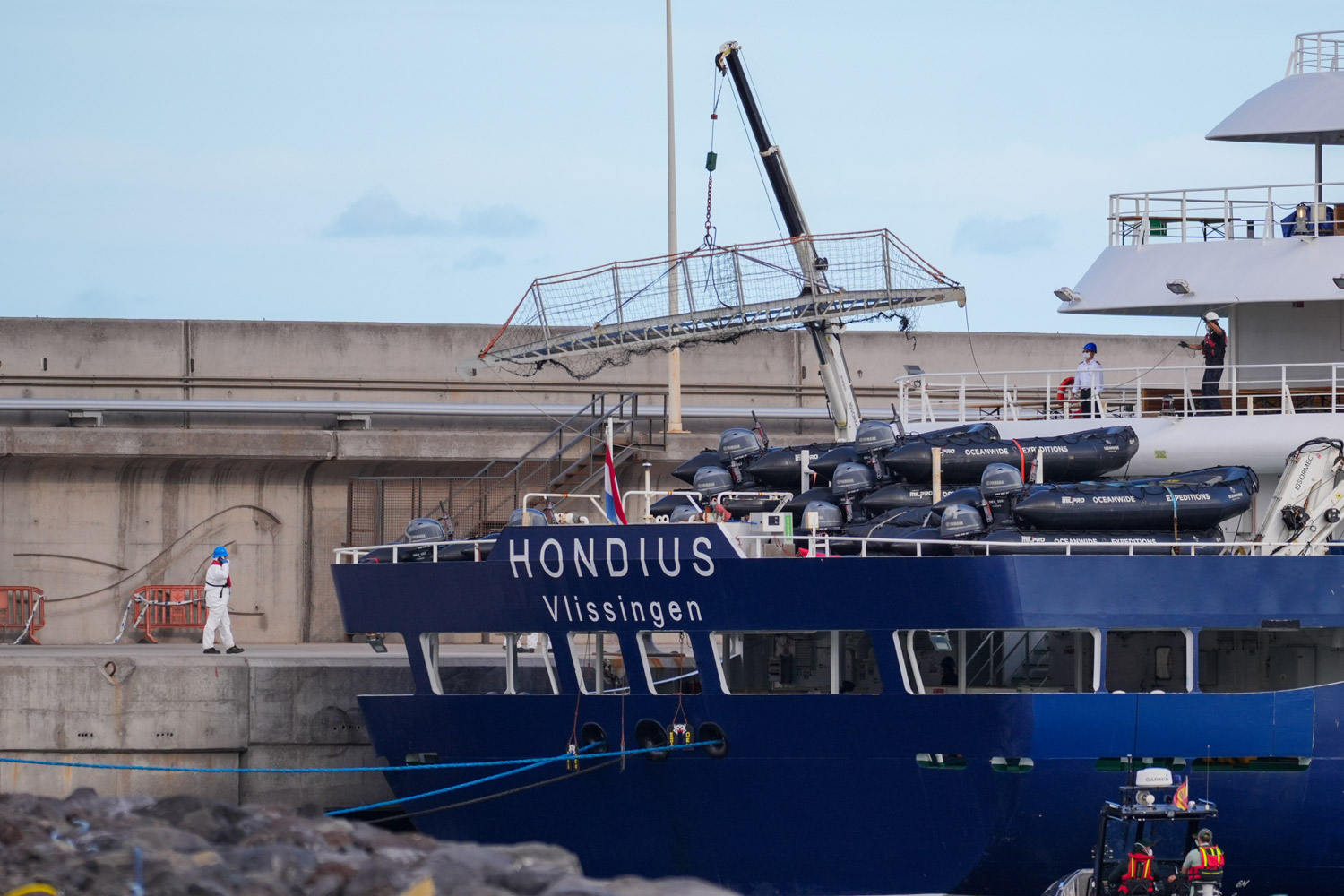
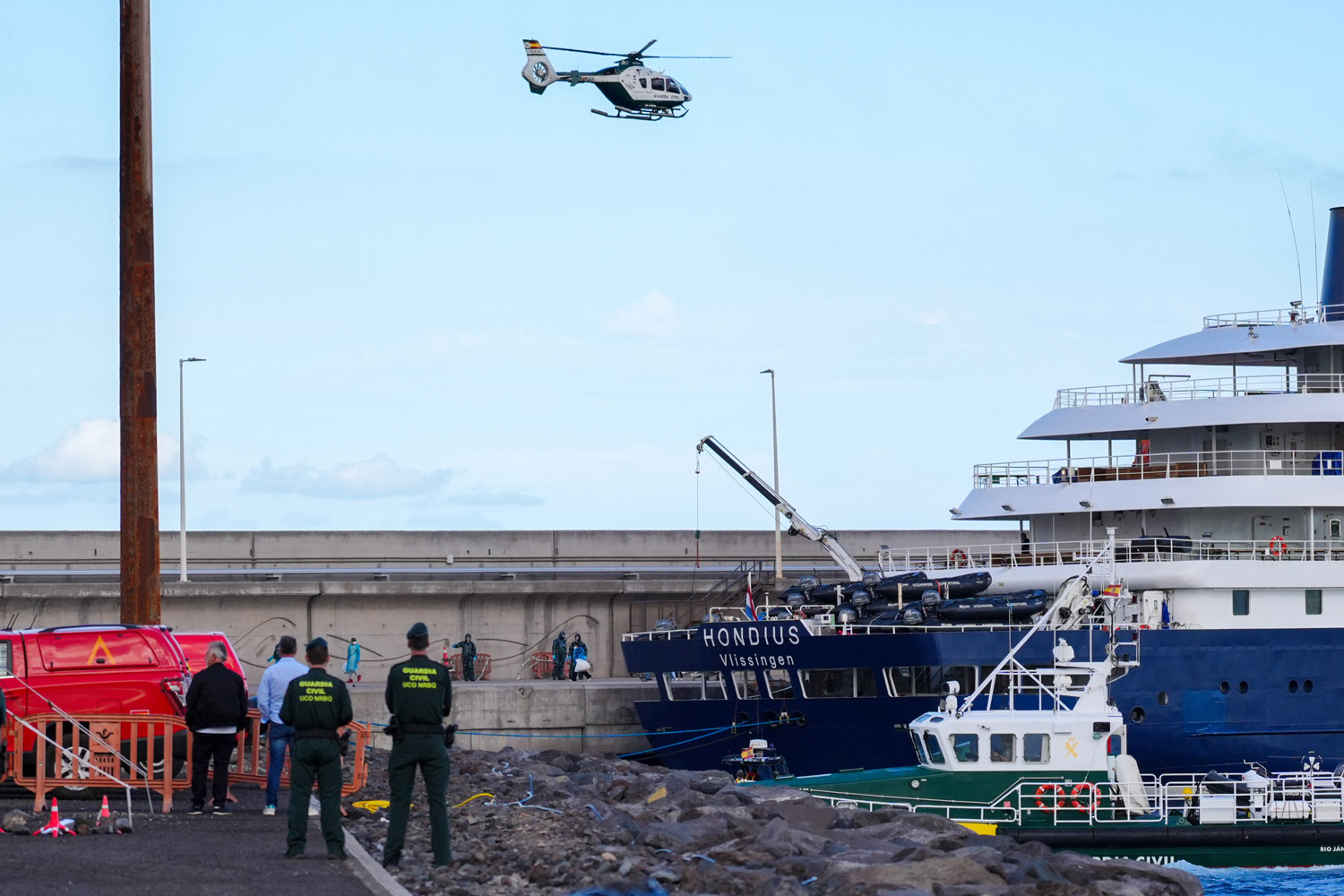
After 150 passengers boarded MV Hondius on April 1, 30-40 disembarked in late April (including the body of the first hantavirus case/victim) and four were evacuated within the past two weeks to receive special treatment. This past Sunday, the blighted cruise ship reached the Spanish Canary Island Tenerife, where all the remaining passengers were carefully processed — by helpers decked out in full-body protective gear and masks — from the ship to government planes home countries had sent to retrieve their citizens. So 18 Americans made it back into the US on Monday via a State Department plane, but the journey is not over yet, and of course, it’s complicated. Two of the Americans returning have tested positive/are experiencing symptoms, so they flew in biocontainment units on the plane, and are being monitored in similar units on the ground. 16 of the Americans are in quarantine in Omaha, Nebraska, including one of the passengers in the special containment unit. Meanwhile the other two passengers, a couple, were sent to a facility in Atlanta, Georgia, where one of them is in containment and the other in quarantine.
The 18 Americans who were aboard the hantavirus-stricken cruise ship Hondius arrived back in the U.S. on Monday, and two of them are in biocontainment units in Omaha, Nebraska, and Atlanta.
Those two Americans traveled in the plane’s biocontainment units “out of an abundance of caution,” the Department of Health and Human Serivces said in a statement.
…U.S. health officials said 16 of the Americans would be treated at the Administration for Strategic Preparedness and Response Regional Emerging Special Pathogen Treatment Center at the University of Nebraska Medical Center/Nebraska Medicine (UNMC) in Omaha.
The two other passengers were taken to Emory University’s Serious Communicable Diseases unit in Atlanta, with one receiving care in the biocontainment unit for mild symptoms. The other passenger is the person’s significant other and is being monitored because they were in close contact with the symptomatic person, Emory University said.
The passengers ranged in age from the late 20s to the early 80s.
Two are from New York state — including one from New York City — one is from North Carolina, and two are from California, officials said. Two other Californians are being monitored in that state after either having been on the ship or on a plane with an ill passenger, the state health officer said.
Dr. Brendan Jackson, the CDC’s acting director of high-consequence pathogens and pathology, said at a news conference Monday that it is relatively normal for people in quarantine to show symptoms during isolation and that officials are being “very liberal” with how they are describing symptoms.
Having symptoms does not necessarily mean a patient has contracted hantavirus, Jackson said. Hantavirus usually requires very close contact and symptoms for a patient to pass it on.
Jackson said the decision to send two passengers to Atlanta was “contingency planning” to keep spaces open at Omaha’s UNMC should they need more room.
At UNMC, 15 patients are in the quarantine unit, and one is in the biocontainment unit, said Dr. Michael Wadman, medical director of the National Quarantine Unit.
Dr. Angela Hewlitt, medical director of the Nebraska Biocontainment Unit, said Monday that it is being used for patients who are well but need to be monitored. She described it as “more like a hotel than a patient care space.” … The one Hondius passenger in biocontainment at UNMC is doing well and does not have symptoms, Hewlitt said.
So of the 18 Americans who just returned, one tested positive for hantavirus but has no symptoms (I read reporting that said the person had tested “mildly positive,” I kid you not), while another is experiencing symptoms but hasn’t tested positive (yet). I wish those two full recoveries, and I truly hope the 16 passengers in quarantine remain symptom-free… and in quarantine! There’s talk of them being allowed to return home to finish a 42-day monitoring period if they don’t show symptoms within the next few days. But we know hantavirus symptoms can take up to eight weeks to appear, and that the disease can go from zero to 60. So why take the risk and leave a specially-designed facility early??
There are also at least 11 people across seven states being monitored (some are at home and self-reporting, see my comments above). These folks either left the cruise during that late April stop — before anyone knew we were dealing with a rare disease (hantavirus) and a yet rarer form of it that can be transmitted human-to-human (Andes virus) — or they were exposed to someone on a plane, like the two California residents mentioned in this article. New Jersey and Maryland have also confirmed plane exposure cases, and honestly, these are the cases that reeeeeaaally worry me. All the health officials continue to insist this outbreak is low risk and very hard to catch; but people catching it from strangers on planes? Not good. Very not good. Another ominous portent? Secretary Robert “Raccoon Genitals” Kennedy just said “We have this under control! We’re not worried about it!”






Photos credit: Europa Press Canarias/Europa Press/Avalon