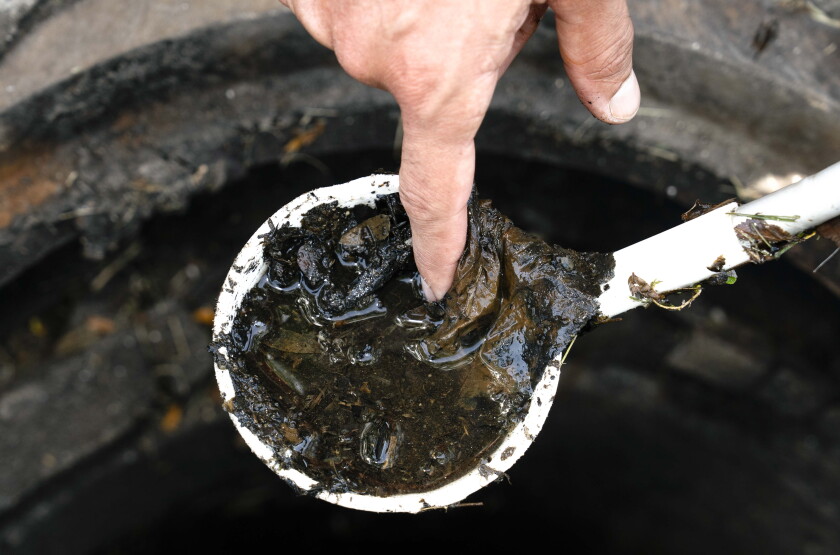
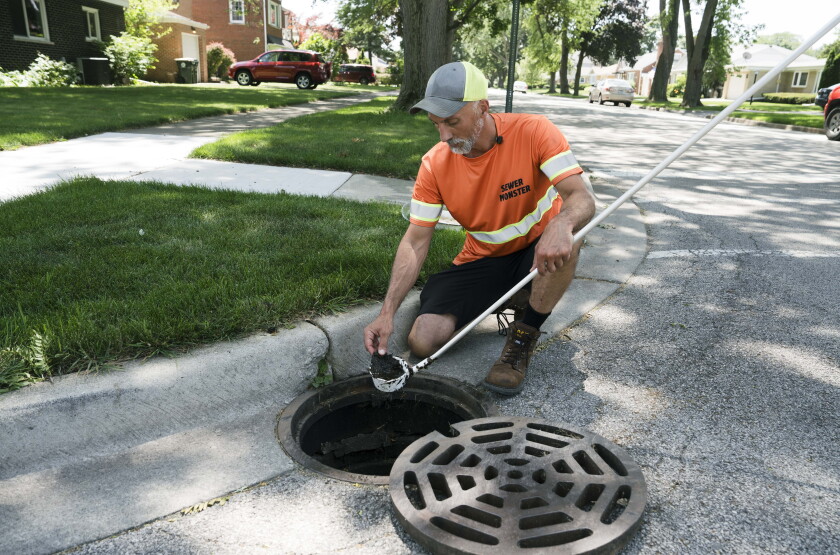
Justin Harbison lowers a long stick with a cup into a stormwater catchbasin to scoop up a sample of sewer water.
He lifts up what he calls his “dipper” and then uses his finger to sift through the murky water.
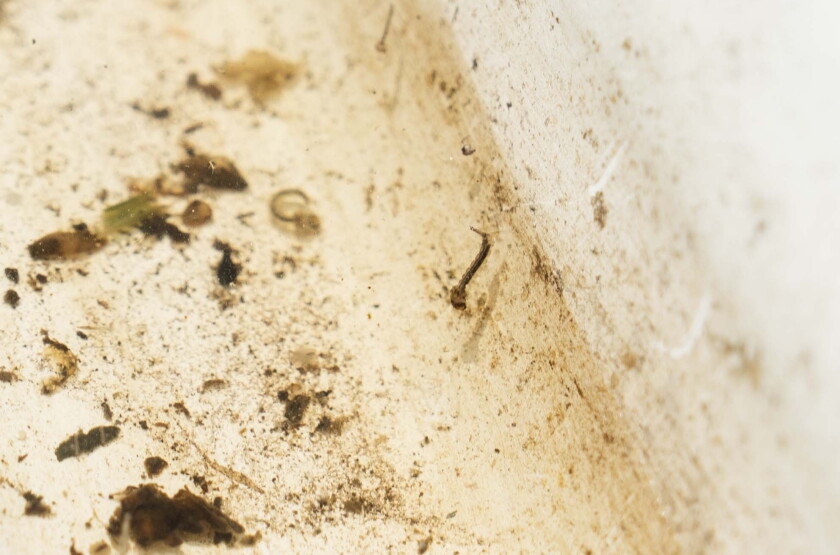
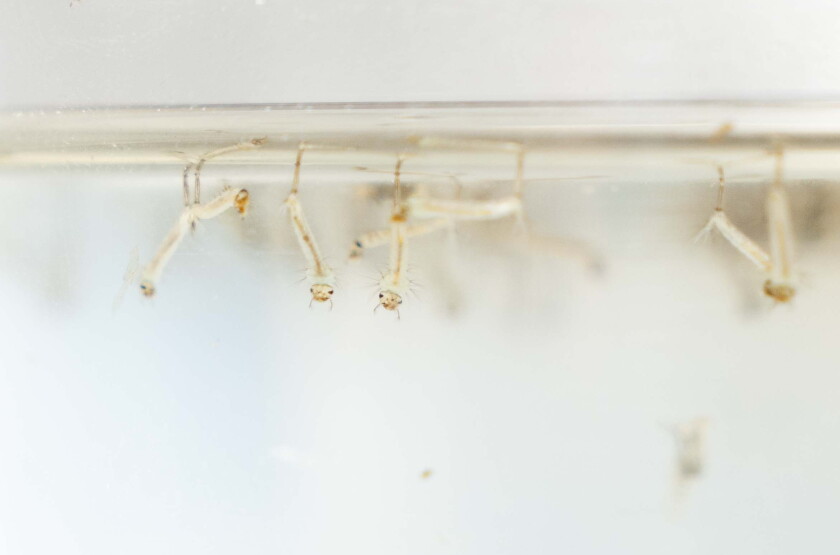
“I see some larvae swimming around,” he says.
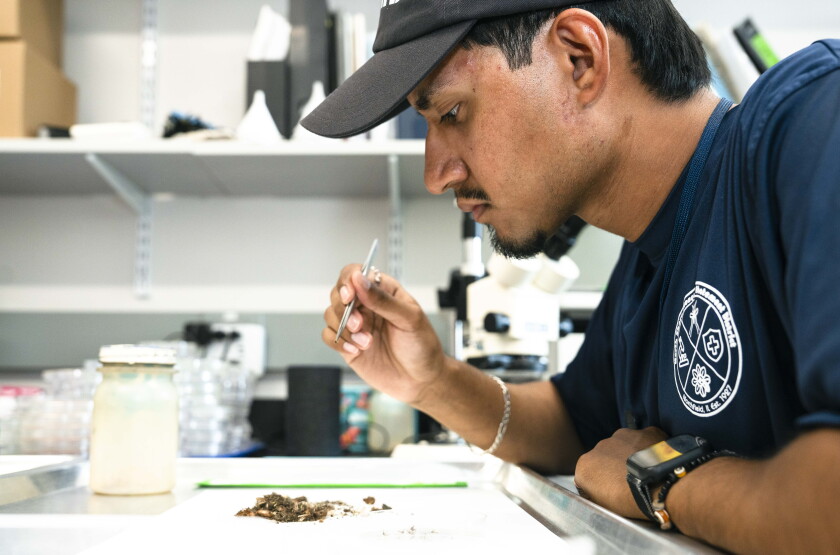
Harbison, a Loyola University researcher, associate professor and self-described “Sewer Monster,” hopes that a chemical treatment placed in the sewer in June will kill the newly hatched mosquitoes, preventing them from growing into adult biters.
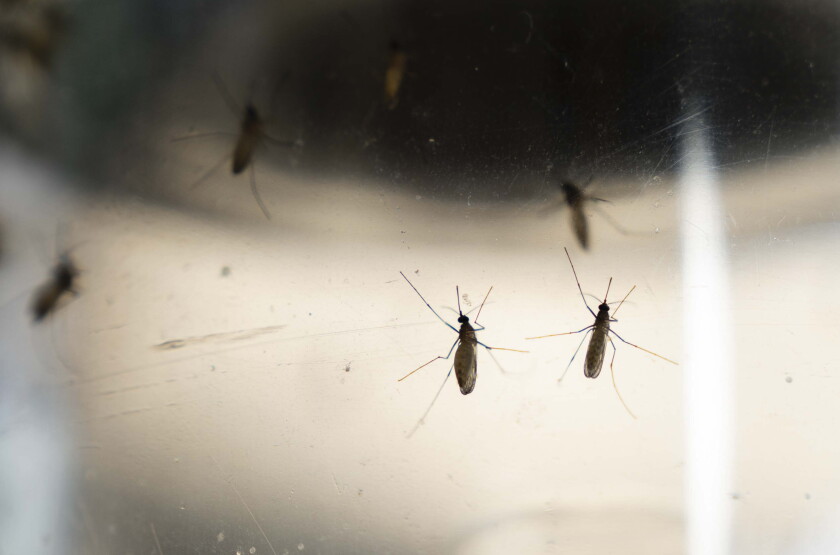
The insects that everyone hates aren’t just annoying, in Illinois they also can carry the potentially deadly West Nile virus, an illness that sickens thousands of people across the country every year. There have been no human cases reported in Chicago this year but health officials expect that may change.
Harbison, who wears a shirt displaying his “Sewer Monster” nickname, is passionate about protecting public health.
Maybe he was destined? As a kid in the early ‘80s, instead of a ghost buster, he dressed up as a “bug buster.”
“I was also kind of the kid who always liked to gross out people,” he says. “When I first got into sewer work I kind of loved it because no one else was doing it. It’s kind of gross.”

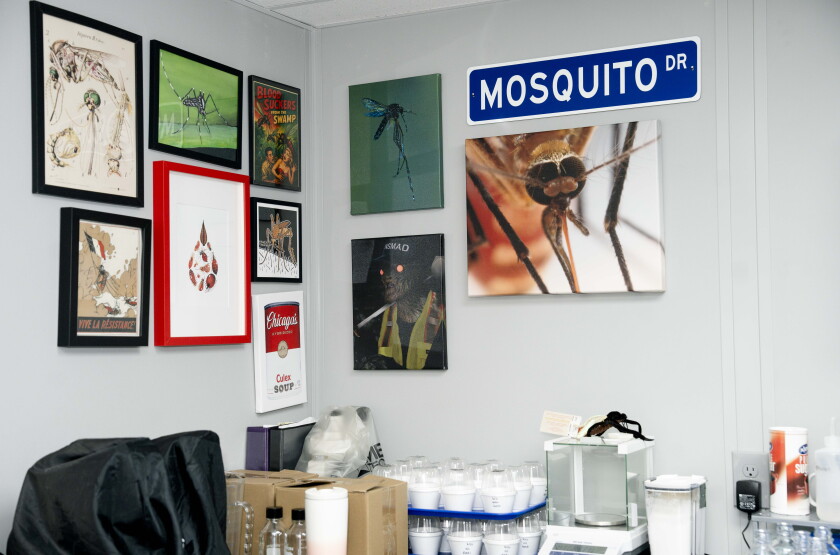
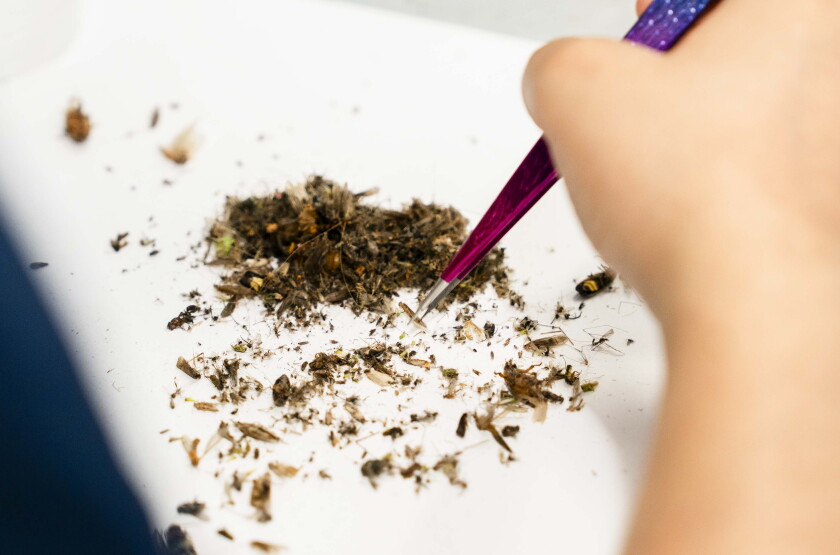
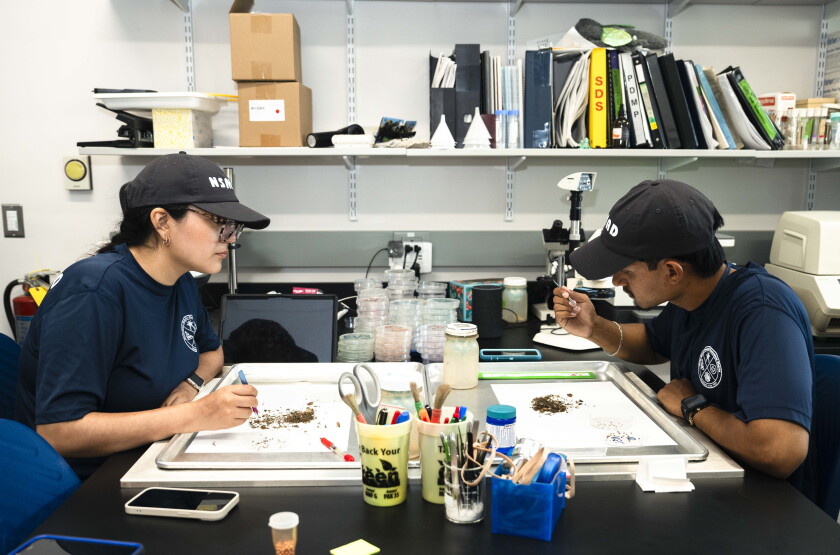
Harbison helps advise a team of experts in suburban Northfield, one of four mosquito abatement districts in the Cook County suburbs, to control populations throughout the area with insecticides added to water where mosquito larvae live. After feeding on blood, females need water to lay their eggs during warm weather months.
So the sewers are an ideal spot for mosquitoes to lay eggs. They are active usually June to early October before the first frost, though they’ve shown up as early as May.
Right now, West Nile virus is what public health officials are worried about, though there have historically been other serious illnesses transmitted by mosquitoes.
Across Chicago, which contracts with a private company to control mosquitoes, chemicals attacking larvae and preventing them from developing are also added to sewers.
These sewer mosquitoes, which can lay 200 eggs at a time in water, are the ones most likely to spread West Nile in cities.
The larvae munch on decaying leaves and other muck that fall into the sewer through drain openings.
“Mosquito females know that it’s a really good spot to lay their eggs because they’re going to have lots of food there,” Harbison says.
By treating the sewers, Harbison estimates he can reduce mosquito populations by more than 35%.
Along the North Shore, where Harbison spends most of his time consulting, all 80,000 catch basins in the northern suburbs of Cook County and a portion of southern Lake County have chemicals placed in them.
North Shore Mosquito Abatement District, the government agency that relies on Harbison’s help, proudly says it has had no human cases of West Nile this year, last year or the year before, says David Zazra, communications manager.
The district is a 100-square mile area with about 350,000 residents.

|
Pat Nabong/Sun-Times

|
Pat Nabong/Sun-Times

|
Pat Nabong/Sun-Times
|
Pat Nabong/Sun-Times
|
Pat Nabong/Sun-Times
|
Pat Nabong/Sun-Times
|
Pat Nabong/Sun-Times
|
Pat Nabong/Sun-Times
|
Pat Nabong/Sun-Times
|
Pat Nabong/Sun-Times
|
Pat Nabong/Sun-Times

Most mosquitos are just a ‘nuisance’
In Chicago, similar larvicide is placed in 80 sewer sites out of about 210. That number fluctuates year to year and depends on what mosquito surveillance shows as well as funding available, according to a city spokesman.
If larvicide sounds scary, consider that it reduces the need to spray pesticides around neighborhoods. It also beats the method of using dynamite to reduce ponds of standing water that helps mosquitoes breed, a practice used for almost half a century that largely ended by 1970.
“Our techniques improved greatly. We’ve moved away from dynamite,” Harbison jokes, adding that larvicide used at low levels isn’t harmful for humans and animals.
Spraying pesticides can harm pollinators, such as bees and butterflies, that are beneficial to gardens and the environment, though government spray trucks usually go out at night when mosquitoes are active.
Chicago sprays when tests show an area has a concentration of mosquitoes infected with West Nile virus, according to Dr. Janna Kerins, a medical director at the Chicago Department of Public Health who focuses on controlling spread of the virus.
“The vast majority of mosquitoes are nuisance mosquitoes but that being said, West Nile virus is something that does occur in Chicago. It’s important that people know they should be protecting themselves,” Kerins says.
There were 34 cases, including two deaths, last year in the city. Infected mosquitoes appear in every neighborhood, though there are generally fewer mosquitoes closer to Lake Michigan, Kerins says.
Last year required additional protections against the virus-carrying insects . In addition to using the larvicide, the city had to spray pesticides seven times in more than a dozen communities in July and August of last year. Some years, there’s no need to spray, something that’s attributed to the sewer treatments.
For some, the virus can be lethal. Those over 65 or anyone with a compromised immune system, including people with diabetes or cancer, are most at risk.
Your chances of getting West Nile are actually low, four out of five people infected show no symptoms. There were 82 human cases across Cook County last year, though that official number likely undercounts. Some people may not realize they even have the virus. Symptoms can range from a mild flu-like condition to serious brain swelling caused by encephalitis.
When the virus was first detected in humans in Illinois two dozen years ago, it became an epidemic, sickening hundreds of people and killing dozens. Efforts to reduce the mosquito populations, educate people about the risks and a lower number of birds carrying the virus have resulted in reduced numbers over the years, according to the Illinois Department of Public Health.
Keeping the bugs away
Harbison recommends people use repellent with 30% of the chemical DEET or another government-registered ingredient, such as picaridin or lemon eucalyptus oil. You can also buy clothing that repels the pests or treat clothes with a chemical known as permethrin.
And after heavy rainstorms, people should dump any standing water around a home or property, he says. That includes flower pots, tires or anything else that can collect rainwater.
“If it can hold water, it can breed mosquitoes!” is the slogan at the North Shore mosquito abatement district, Zazra says. Health officials also urge people to report standing water that can encourage breeding.
The mosquitoes instinctively know where water will collect, such as the saucer below an outdoor pot. More than 1 million years of evolution have informed them, according to Zazra.
“Mosquitoes have been around longer than humans. So, they have a running start,” Harbison adds.
So, all the more important to get ahead of the breeding season.
“Mosquitoes populations are going to grow exponentially,” Harbison says. “Any mosquito can become an adult. In theory you’re eliminating 200 mosquitoes. And they can produce another 200,” Harbison says. “I may be eliminating transmission of a disease. It’s something that’s doing some good.”