The New York Jets did not just struggle defensively last season. They produced a stat line that almost does not make sense in a modern NFL context.
Zero interceptions across an entire season.
That number has now shifted the conversation from scheme and coaching to something more direct. The roster itself may not have had the playmakers needed to flip games. And according to recent analysis from NFL contributor Matt Okada, there is a clear and relatively low-risk way to address that problem.
It starts with a former star who once defined ball production.


A Turnover Problem That Cannot Be Ignored

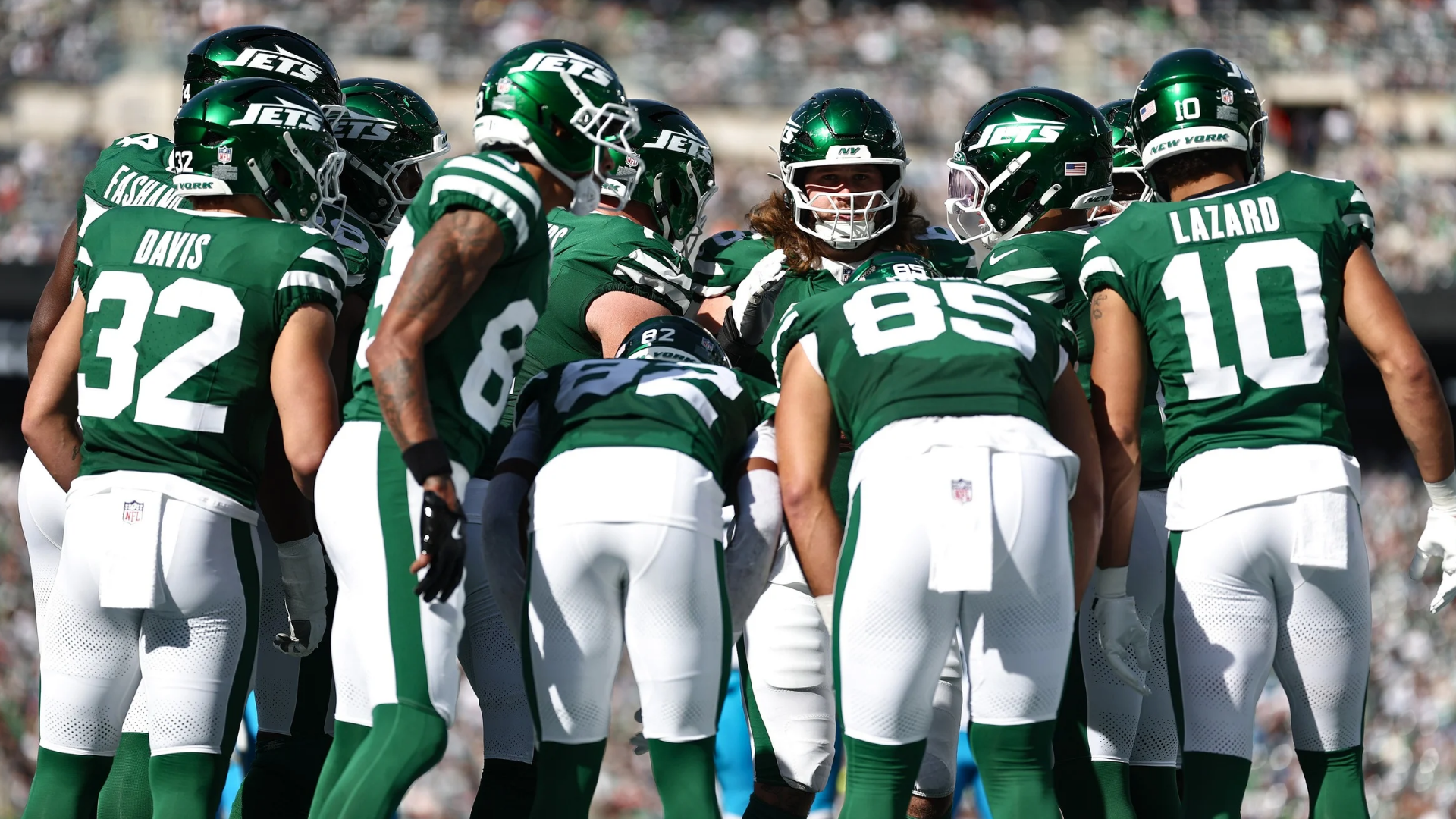
GettyThe New York Jets huddle against the Carolina Panthers during their game at MetLife Stadium on October 19, 2025 in East Rutherford, New Jersey. (Photo by Al Bello/Getty Images)
The Jets’ 3-14 finish cannot be pinned on one issue, but the lack of takeaways removed any margin for error. When an offense struggles, defensive volatility becomes essential. Turnovers create short fields. They change momentum. They steal possessions.
The Jets had none of that.
Okada described the statistic as one of the most shocking he has seen, which reflects how far outside the norm it sits. Even average defenses manage to generate a handful of interceptions over a full season. For the Jets, the absence of those plays forced them into longer drives and tighter margins every week.
That context is what makes the proposed solution more compelling.
Adding Trevon Diggs is not about fixing everything. It is about injecting a specific trait the roster clearly lacked.

Why Diggs Fits the Jets’ Current Timeline

GettyTrevon Diggs #7 of the Dallas Cowboys anticipates a play during a game against the Green Bay Packers at AT&T Stadium on September 28, 2025 in Arlington, Texas. (Photo by Stacy Revere/Getty Images)
At his peak with the Dallas Cowboys, Diggs was one of the most disruptive defensive backs in football. His 11 interceptions during the 2021 season remain the highest single-season total in decades. That kind of production is not accidental. It reflects instincts, anticipation, and a willingness to take risks.
Diggs has always been a high-variance player. His aggressive style leads to big plays, but it can also expose him against disciplined route runners. Over time, injuries and adjustments from opposing offenses reduced his impact, ultimately leading to his release.
However, that decline does not eliminate the value of what he still represents.
For a Jets team that already invested in young secondary pieces and added depth through the draft, Diggs would not need to carry the unit. Instead, he would serve as a calculated swing. A player who can change games when the opportunity presents itself.
That aligns with Okada’s framing of the move as low-cost and low-risk.
If Diggs cannot return to form, the Jets have alternatives. They added players like Nahshon Wright and drafted additional help at the position. The floor is protected. The roster does not collapse if the signing fails.
But the ceiling is where the real appeal exists.
If Diggs recaptures even part of his early-career production, the Jets would instantly transform one of their biggest weaknesses into a strength. Turnovers would no longer be absent. They would become a defining element of the defense.
That kind of shift does not just improve statistics. It changes how games are played.
Quarterbacks become more cautious. Play-callers adjust. Opportunities emerge in ways that cannot be easily replicated through scheme alone.

A Decision That Reflects Identity
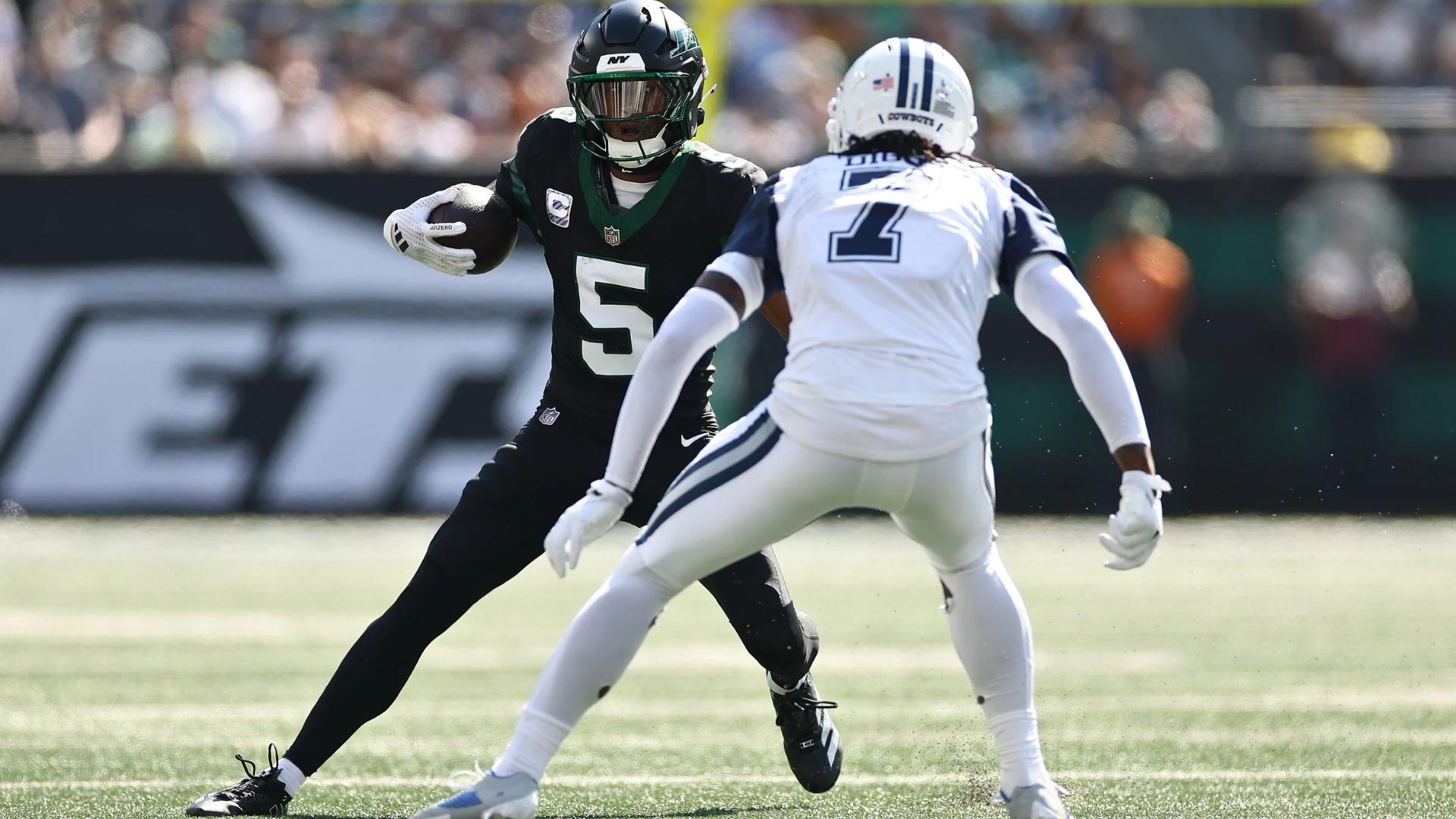
GettyGarrett Wilson #5 of the New York Jets runs with the ball against Trevon Diggs #7 of the Dallas Cowboys during the second quarter in the game at MetLife Stadium on October 05, 2025 in East Rutherford, New Jersey. (Photo by Sarah Stier/Getty Images)
The Jets’ 2026 offseason has already shown a focus on structure and defined roles, especially through the draft. Adding Diggs would represent a different type of move.
It would signal a willingness to embrace volatility in the right areas.
That distinction matters because not all risks are equal. Some expose weaknesses. Others create upside that cannot be manufactured through safer options.
For the Jets, the inability to generate interceptions is not a subtle issue. It is a structural flaw that demands a targeted response.
Diggs offers exactly that.
Now the question is whether the organization views that upside as worth the gamble, or if it continues to build more conservatively around a defense that still lacks the one thing it could not produce last season.
Like HEAVY’s content? Be sure to follow us.
This article was originally published on HEAVY
The post Jets Urged to Fix Major Flaw With Ex-Cowboys Star appeared first on HEAVY.