The 49ers NFLPA report card grades are out, and the headline number for San Francisco is the one fans have been arguing about for months: players graded the 49ers’ training staff a C- and the training room a C-. That’s the lowest area on the team’s card, and it lands at a moment when San Francisco’s injury issues have been under an unforgiving spotlight.
The news dropped Feb. 26, after earlier reporting suggested the NFLPA would not be allowed to share the grades publically. ESPN reporter Nick Wagoner reported the 49ers grades.
This also hits now becuse this is peak “decision season” for the NFL: combine week, offseason planning, budget setting, staffing evaluations, and free agency prep. If players are flagging medical/training as a weak point, it’s the kind of feedback teams try to address before the next roster is built.
Key Points
-
Players gave the 49ers C- grades for both Training Staff and Training Room.
-
The rest of the card is mostly strong, including Head Coach (A-), GM (A-), and Team Ownership (A-).
-
The grades add fuel to the broader question: how much of San Francisco’s injury pileup is “bad luck,” and how much is process?
What were the 49ers NFLPA report card grades and what stood out?
On the full card, San Francisco scores well in plenty of places players care about day-to-day: Food/Dining Area (A), Weight Room (A), Strength Coaches (A), plus solid marks for the coaching/leadership structure (Position Coaches A-; Offensive Coordinator A-; Defensive Coordinator A; Special Teams Coordinator B+).
But two categories cut through everything else because they connect directly to availability on Sundays:
-
Training Staff: C-
-
Training Room: C-
And there’s one more “quietly loud” grade in the mix: Team Travel: C+.

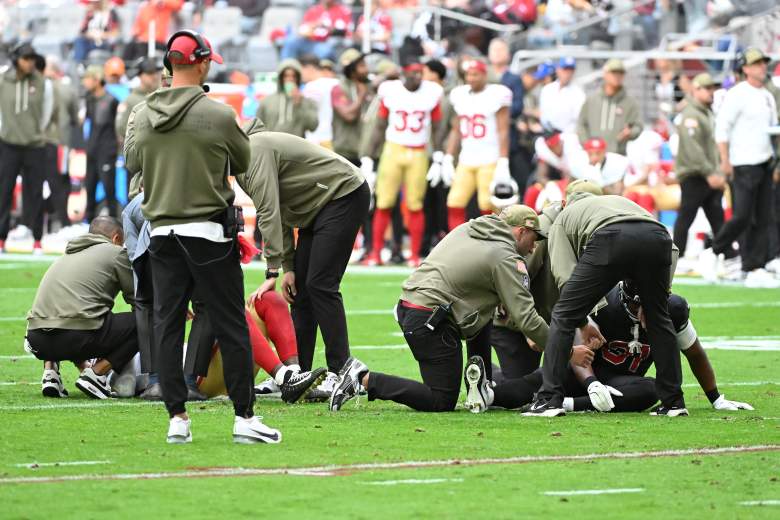
GettyThe 49ers NFLPA report card grades included a C- for training staff and training room, two categories that stand out after a season packed with injuries.
How the NFLPA grades work (and why teams care)
The NFLPA’s team report cards are built from player survey responses, then translated into letter grades across multiple categories that touch facilities, staffing, and organizational support. ESPN reported it obtained the 2026 results and published the full team-by-team grades.
One wrinkle: Sports Illustrated reported the NFLPA will no longer publicly release the annual report cards going forward, which makes any credible obtained/reported set of grades even more influential in the media cycle—because teams can’t simply “drop the PDF” themselves to control the message.
These grades don’t “prove” malpractice or guarantee causation with injuries. What they do show is player sentiment about staffing quality and resources, how responsive the room is, how effective treatment plans feel, and whether players trust the process.
Do the C- grades explain the 49ers’ injuries? Here’s the fair way to frame it
San Francisco’s injury discussion has been so loud that it’s spawned everything from process critiques to wild theories, and even prompted public pushback from league medical leadership on at least one circulating idea.
Here’s what the C- / C- combo can responsibly suggest:
-
Players believe the training ecosystem is below the standard they expect from a top franchise.
-
That perception matters because buy-in affects everything from rehab compliance to how quickly players report issues.
Here’s what it doesn’t prove:
-
That the training staff “caused” any specific injury (football injuries have major randomness, contact variables, and workload factors).
Yet, fans will have a hard time looking past the incredible long list of injured 49ers last season: Nick Bosa, Fred Warner, George Kittle, Brock Purdy, Brandon Aiyuk, Yetur Gross-Matos, Bradlee Anae, Mykel Williams, Robert Beal, Sam Okuayinonu, Marquez Valdes-Scantling, Nick Martin, and Tatum Bethune.
What changes could fans actually notice?
If San Francisco takes the feedback seriously, the fixes fans might see (not just hear about) include:
-
Facility upgrades tied to the training room experience (equipment, rehab space, recovery resources).
-
Process transparency: more consistent injury updates and clearer rehab timelines (where possible under privacy rules).
-
Staffing structure tweaks: additional roles, new leadership, or reallocated responsibilities.
And don’t ignore Team Travel (C+). Players travel every week; if they’re unhappy there, it can overlap with recovery, sleep, and routine.
Like Heavy Sports’s content? Be sure to follow us.
This article was originally published on Heavy Sports
The post 49ers Players Deliver Bad News in Key Area as Injury Questions Linger appeared first on Heavy Sports.