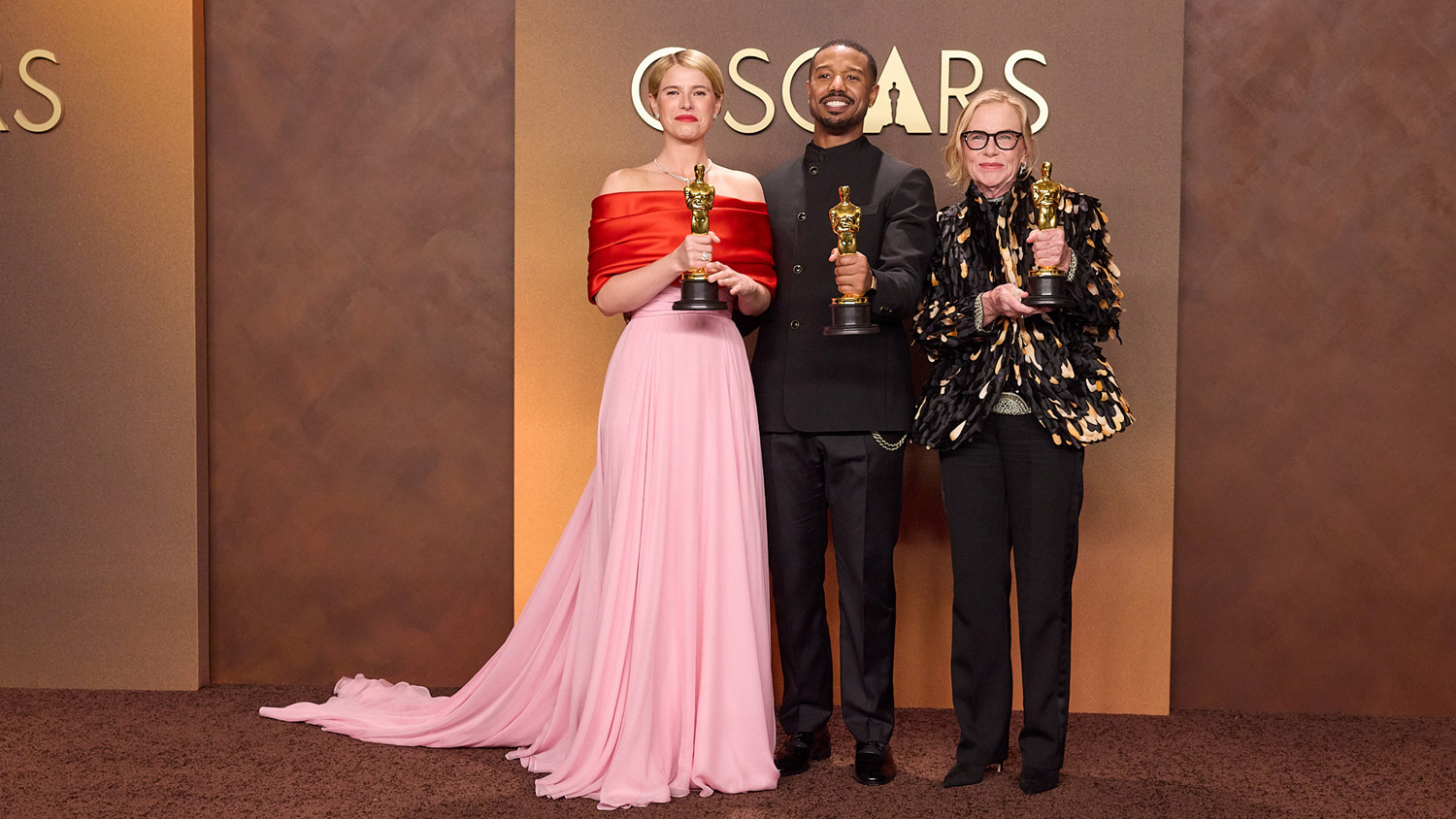
The Oscars categories have undergone multiple rewrites and editing over the award show’s nearly 100-year history. Sometimes changes are mandated to reflect new technology, and sometimes new categories are born out of campaigns to redress past wrongs. For instance, this year’s Academy Awards featured the inaugural Best Casting category (which went to Cassandra Kulukundis for One Battle After Another, thus throwing off my Oscar pool ballot because I was SURE Francine Maisler was gonna win for Sinners, but I digress…). Meanwhile the 100th annual Oscars in 2028 will include the first Best Stunt Design Award. Both categories were seen as long overdue and took impassioned lobbying to the Academy of Motion Picture Arts & Sciences (AMPAS) to enact. And the work is ongoing, as AMPAS just announced a slew of changes to rules and eligibility for several categories, including Acting and International Film, as well as finally offering some guidance on AI. From Deadline on the “seismic” changes:
From this point on in the acting categories, both lead and supporting, actors can be nominated for more than one performance in those individual categories if those performances place in the top five votes. … Previously, unlike every other category, if an actor had movies that gained two or even three of the top five votes, only the performance that got the most votes would be eligible. The Academy’s Board of Governors now has thrown that stipulation out the window to match the way other categories always have operated. In 2000, for example, Steven Soderbergh was nominated for Best Director for Erin Brockovich and Traffic, winning for the latter. The same thing now can happen in acting categories. If an actor has an extremely prolific year, might we even see someone swallow up three of the five nominations? Probably won’t happen, but it’s now possible.
Another seismic and long-overdue change is coming to the International Film category (formerly Foreign Language Film), where there now are two ways to submit a movie for consideration. Previously a film had to be the official selection chosen by the country or region, but now a non-English-language film can be submitted simply by winning a qualifying award at an international film festival. Those festivals and specific awards qualifying this year will be Berlin (Golden Bear), Busan (Best Film Award), Cannes (Palme d’Or), Sundance (World Cinema Grand Jury Prize), Toronto (Platform Award) and Venice (Golden Lion). One recent example would be that France’s Anatomy of a Fall, which won the Palme d’Or in Cannes but was not submitted to Oscars by France, now would be eligible as well as the country’s official entry.
There is another equally eye-popping change in that the International Feature Film category now will be credited as the nominee rather than country or region, as always has been the case. The award will continue to be accepted by the director on behalf of the whole creative team, but the director’s name now will be on the statuette plaque. It never was before, and AMPAS didn’t include International Film wins in the official count of how many Oscars that director may have won in other categories. Oscar only counted the wins for individual countries. Ever.
And wait, there’s more! AMPAS has jumped into the AI conversation in an official way, now clearly stating that only performances “demonstrably performed by humans” will be eligible in acting categories. The same goes in writing categories, which have been codified to say only human-authored screenplays are eligible.
…In the Original Song category, the rules clarify a song’s eligibility when based on its placement in the end credits. For songs submitted as the first new music cue once the end credits begin, the video clip must include the last 15 seconds of the film before the credits begin.
While I don’t see why AMPAS should deny a deserving actor more than one nod in a single category, practically speaking, I think studios will advise against it behind the scenes so an actor doesn’t split their own votes. Regarding all the changes to International Film, I have a few thoughts: obviously a single country can have multiple Oscar-worthy films in a year, but will increasing the allotted submissions to two films be a disadvantage to countries with smaller film industries? And as for the statuettes being engraved with the director’s name, I’m curious how AMPAS decided on that when a Best Picture winner is usually attributed to the producer? Just playing devil’s advocate, here, on these points!
And then there’s AI, sigh… I’m just not buying that “demonstrably performed by humans” is anywhere near a clear enough statement. Take last year when Adrien Brody won Best Actor (and gave the longest acceptance speech in Oscars history) for The Brutalist. Leading up to the awards there was a minor brouhaha when we learned the filmmakers had used AI to improve Adrien’s Hungarian. The performance is “demonstrably performed” by Adrien Brody, which is why I wish AMPAS would take a firmer stance against performances being augmented by AI in ANY way. If we lose acting to AI, then we’ve really lost the plot.







Photos credit: Avalon.red/Avalon, Etienne Laurent/The Academy/Avalon, Phil McCarten / The Academy/Avalon