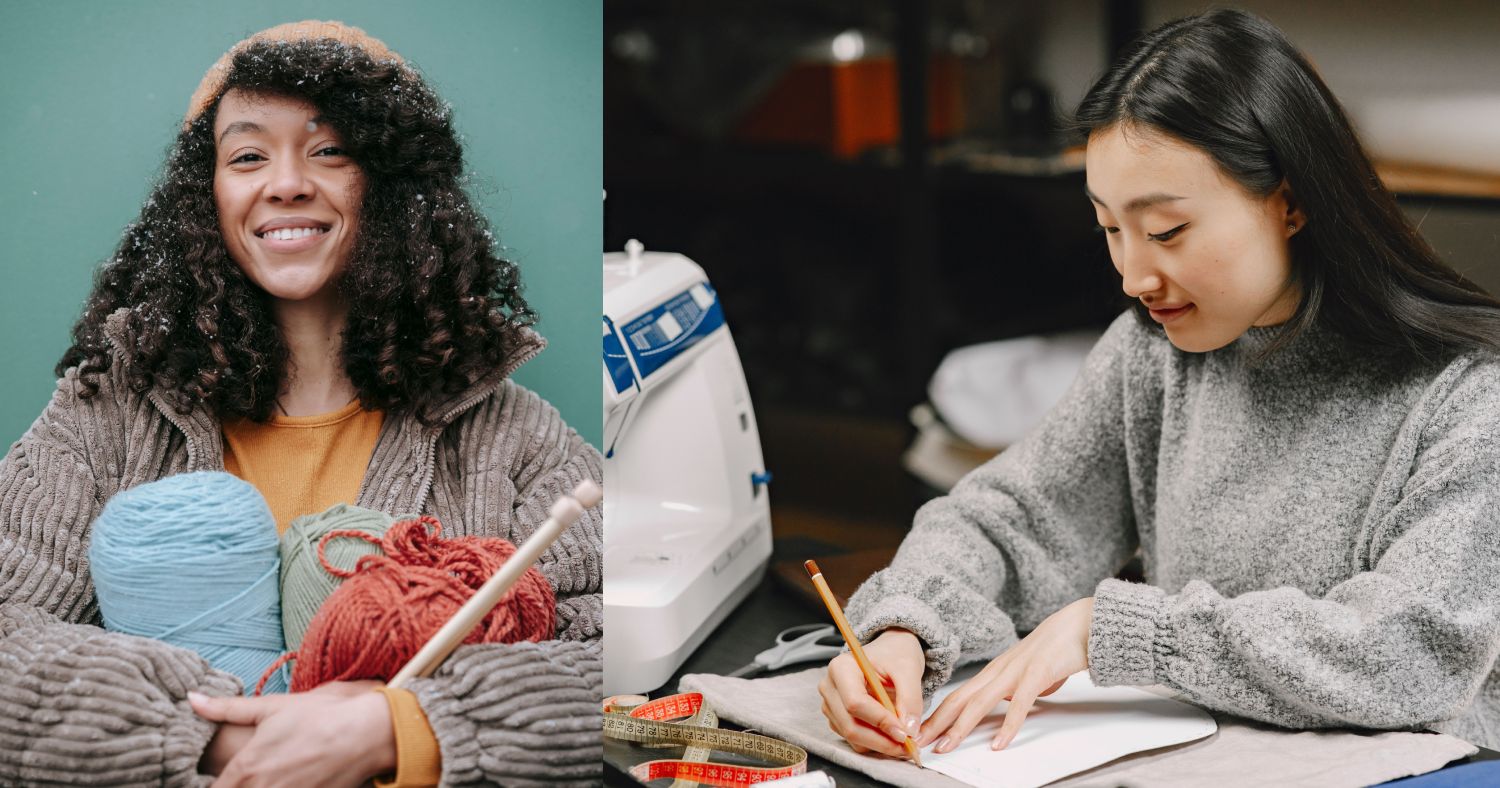
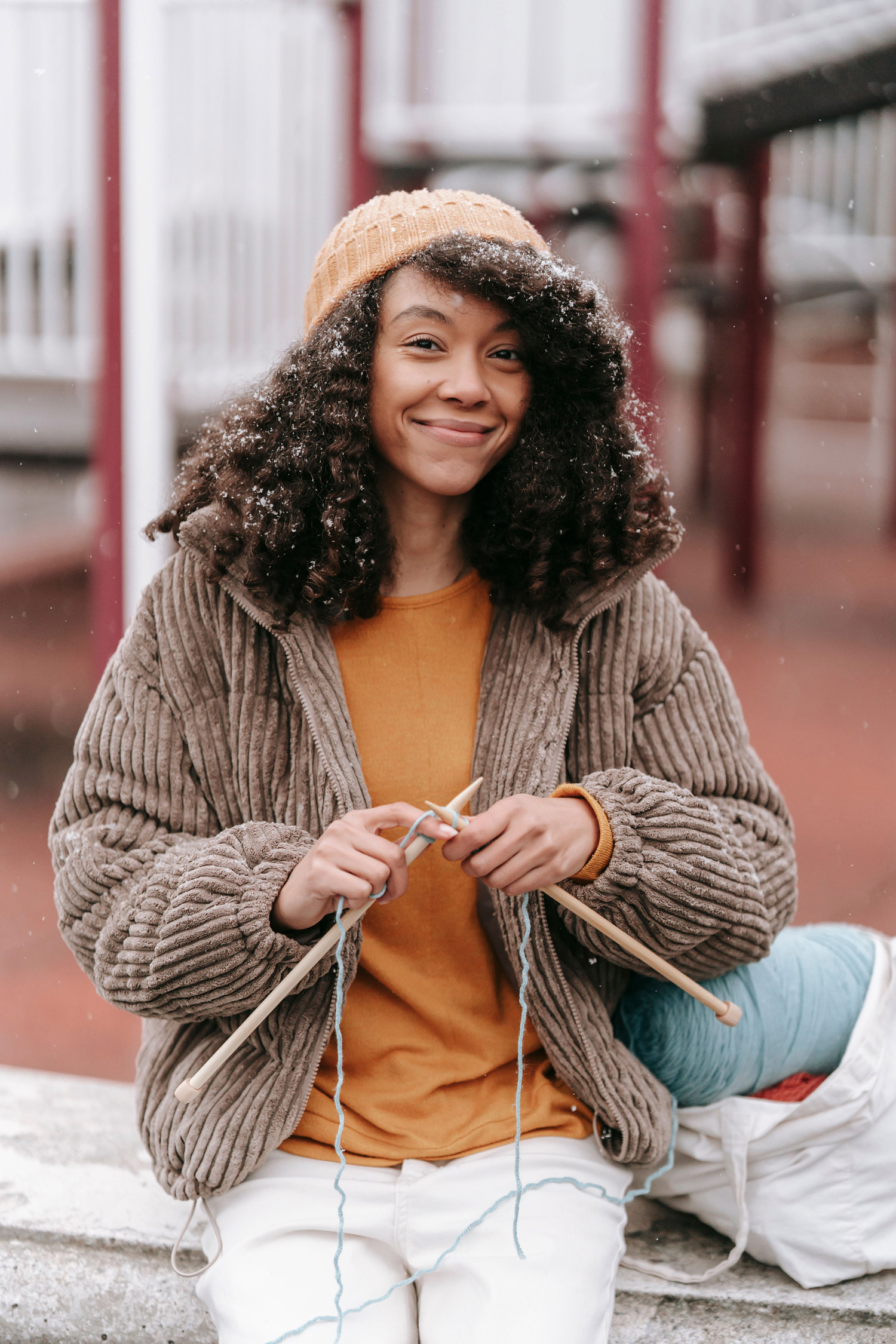
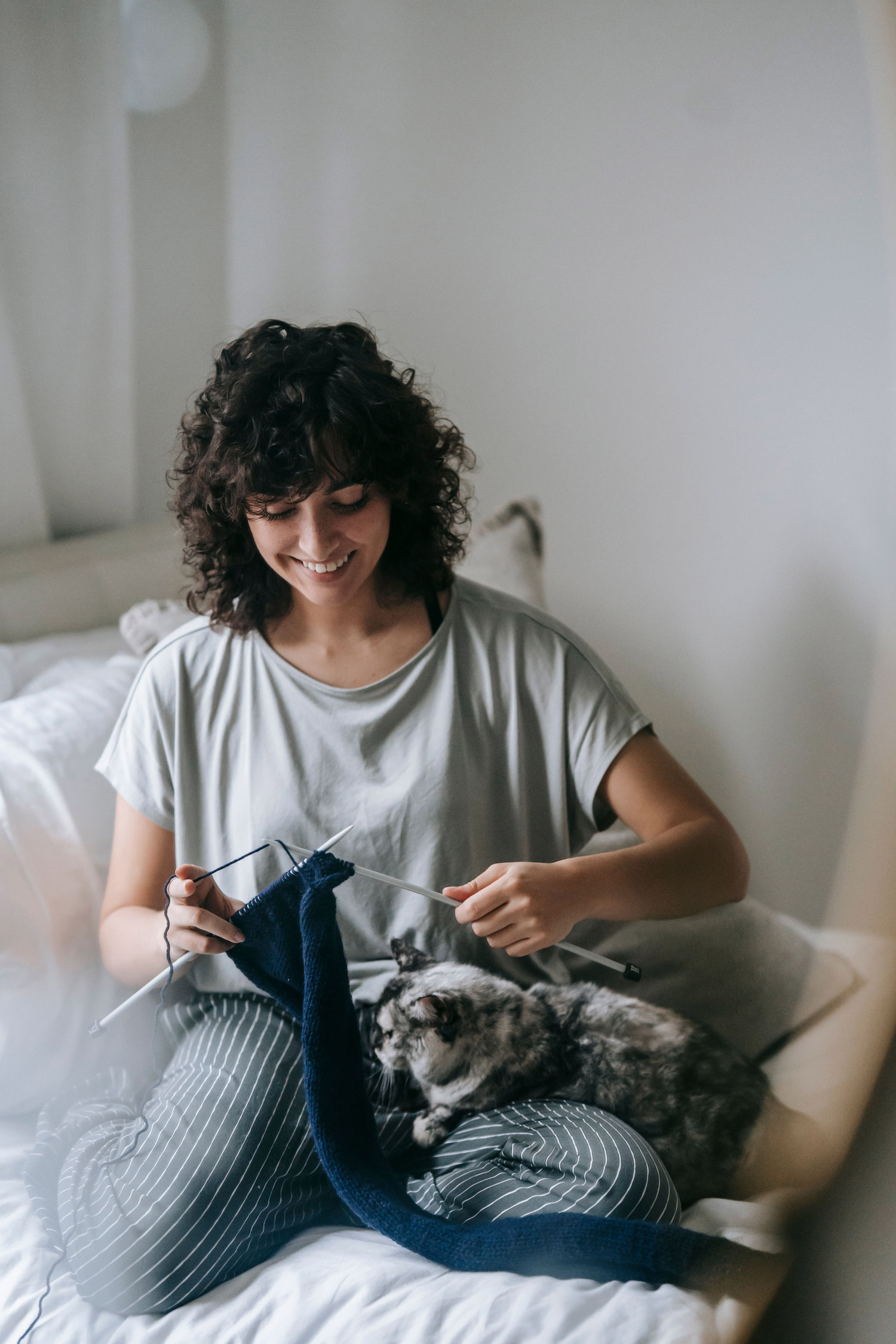
Gen Z are a curious, at times confounding bunch. With one hand they deride grammar and spelling as “limiting,” yet with the other they seek to resurrect retro technology and vintage arts. The latter was the focus of a recent New York Times article, specifically Gen Z’s love of what’s referred to as “grandma hobbies.” We’re talking sewing, quilting, knitting, print-making, anything that takes you out of your head and into your hands. Renewed interest in these crafts (too often written off as quaint) has grown so robustly that folk schools across the country are seeing huge upticks in enrollment. The author of the NYT piece, Kate Brennan, reported from the field as she visited the Green Door Folk School in Cedar, Michigan for a two-day quilt workshop. A snapshot of her time with those crafty Gen Zers:
“Grandma hobbies reconnect us to ourselves,” said Cal Newport, a professor of computer science at Georgetown University who writes about technology, focus and productivity. “These activities are hard, in that they require time and concentration to master. But they also offer clear and fulfilling rewards.”
Mari Sanborn, the communications coordinator for the Folk School Alliance, a nonprofit that supports folk education across the United States and Canada, said learning handicrafts offers a way to reclaim a sense of community as well as traditional skills.
“It’s a way of holding onto things that might one day be lost,” she said.
The folk school movement emerged in Denmark in the 1840s, when educator Nikolaj Frederik Severin Grundtvig championed learning rooted in lived experience, rather than rote study. He envisioned “schools for life” that would strengthen rural societies through craftsmanship and lifelong learning. The model spread through Scandinavia, and then to the United States in 1878. Today, more than 100 folk schools operate across the country.
…Susan Luckman, a professor of culture and creative industries at Adelaide University in South Australia and the author of “Craft and the Creative Economy,” said that analog pastimes give “a little bit of self-empowerment back in a world that can often feel overwhelming.”
“At a very basic level, I think people are looking for something to do recreationally that doesn’t involve a screen,” she added.
Grandma hobbies are all over the internet. On Instagram and TikTok, users have embraced “WIP Wednesday” (short for “work in progress”), a weekly ritual of sharing updates on projects like knitting and needlepoint. Pinterest searches for beginner sewing projects have quadrupled over the past year, driven largely by users under 34. Several of Green Door’s Instagram reels — storybook-like scenes of barn dances, plein-air painting and maple syrup tapping — have amassed tens of thousands of likes.
…After a brief sewing machine demonstration by Cody Cook-Parrott, the class instructor, students sifted through bins of fabric and fanned out across the property. Some, including Claire Erwin, 30, set up their machines at picnic tables outside. Ms. Erwin was the first student to enroll in Green Door’s inaugural class: wooden spoon carving. She and her fiancé keep coming back for more workshops, despite the fact that she accidentally stabbed herself in the hand.
“Remember I got that infection?” she said to her friend, Maura Fitzgerald, also 30, who laughed and nodded without looking up from her quilt. “I just kept going because I was having so much fun making my spoon.”
…Anne Kirketerp, a Danish psychologist and longtime folk school instructor who wrote a book called “Craft Psychology,” calls this phenomenon “meaningful self-forgetfulness.”
“When we create something that requires full attention, the part of our brain called ‘default mode network’ is diminished,” Dr. Kirketerp said. “The constant inner noise or negative ruminating thoughts are absent.”
She added, “That is what we need desperately.”
“I just kept going because I was having so much fun making my spoon.” I’ll have what she’s having! I never thought such a spoon-happy sentence was even possible, but the fact that it was uttered earnestly in the aftermath of stabbing herself and getting an infection?? Bananas! I love everything this folk school movement is about… while at the same time reserving the right to think this could be the setting for a horror movie. Because really, what makes a person so enamored with a spoon that they ignore bodily injury? Or have I just not encountered the right wooden spoon yet? And before you start saying, “Oh wow, Kismet’s really gone off the deep end this time,” may I point out that one of Green Door’s class offerings is: Chainsaw Milling! Among a roster of admittedly delightful crafts like Carve and Print: Block Printed Tea Towels, Beginner Sock Knitting (which can later be followed up with Whimsical Holiday Socks), and Large Willow Herb Tray/Irish Skib Weaving, to name but a few.
In all sincerity, it makes me giddy that the youngins are finding joy in detailed, handmade artistic pursuits. Hobbies that require full concentration — but softly, joyfully — are so important. In my life, it’s been watercoloring, which yes, Green Door does have a class in for botanicals. Maybe I’ll make my way to Michigan this year; brush up on my painting, and see for myself what that damn spoon is all about.
photos credit: Gustavo Fring, Miriam Alonso, Sam Lion on Pexels