The Detroit Tigers spent July treating Eduardo Valencia like catching insurance. His first 54 at-bats are making that description look increasingly inadequate.
Valencia finished the weekend batting .389 with six home runs, six doubles, 17 RBI, and a 1.244 OPS, according to the Tigers’ official statistics. He has 21 hits in 19 games despite entering the season without an established major-league role.
Those numbers do not prove Detroit has discovered a permanent star. They do explain why the club can evaluate its catching depth differently after moving on from Jake Rogers.
A Small Sample With Enormous Production

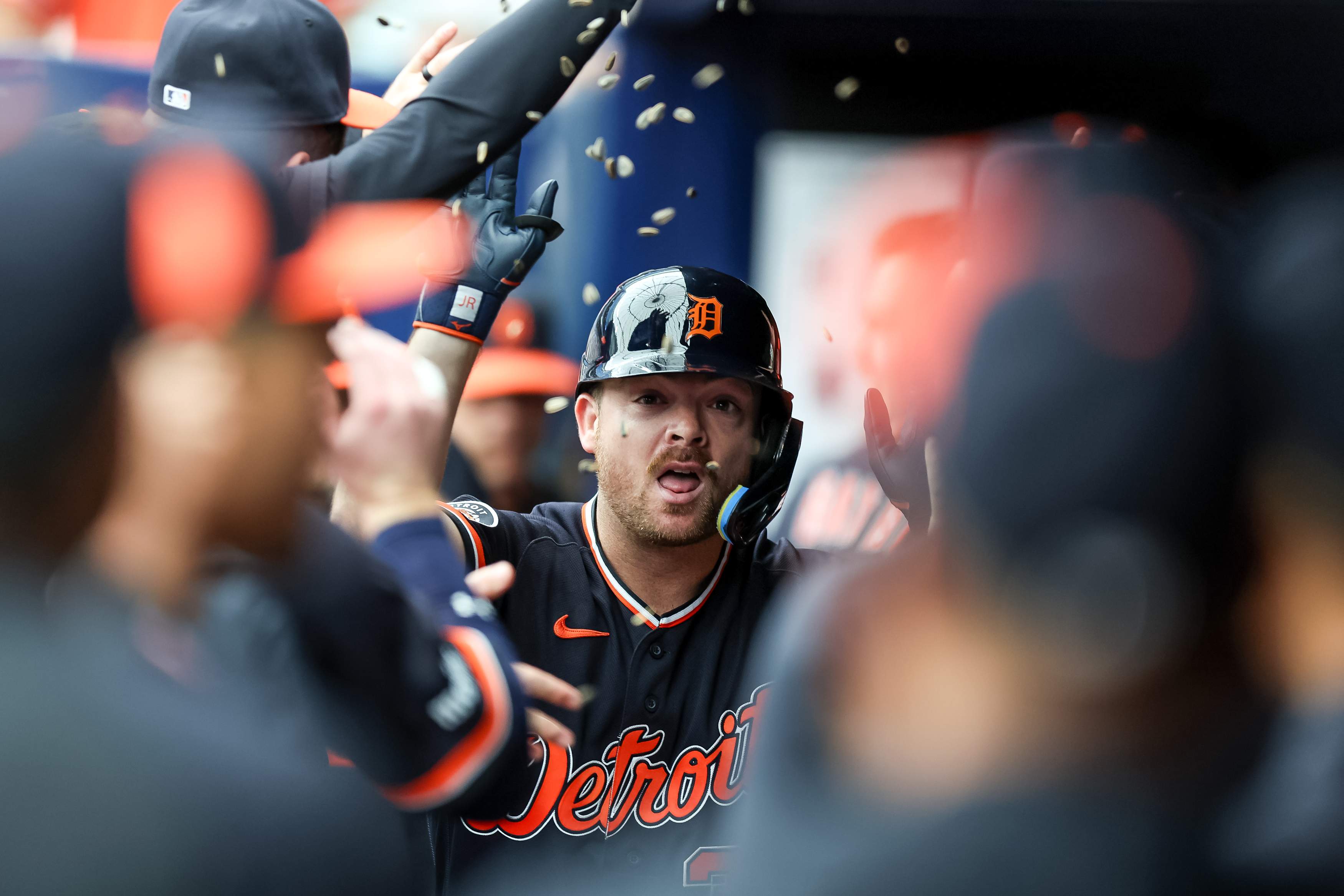
GettyEduardo Valencia #32 of the Detroit Tigers reacts after hitting a home run against the Baltimore Orioles during the bottom of the second inning at Comerica Park on July 28, 2026 in Detroit, Michigan. (Photo by Nic Antaya/Getty Images)
Valencia’s opportunity initially appeared temporary. Detroit promoted him while Dillon Dingler dealt with a hand issue, giving manager A.J. Hinch another catcher and a potential right-handed bench bat.
Instead of merely surviving, Valencia produced immediate power. He homered Saturday again against the Chicago White Sox, driving in two of Detroit’s three runs in a 4-3 defeat reported by Reuters.
His rate statistics are extreme. Valencia is averaging one home run every nine at-bats and has collected an extra-base hit on more than half of his 21 hits. One additional hitless series could move the batting average substantially, but six home runs cannot be dismissed as a rounding error.
The underlying question is how Valencia adjusts once opponents build a more complete scouting report. He has struck out 15 times and drawn only one walk. Pitchers will test whether his aggressive approach can be exploited outside the strike zone.
Valencia is not surviving on home runs; he has driven pitches for damage. Even modest regression could leave Detroit with a productive bat if extra-base ability persists.

Why the Rogers Timeline Now Feels Different
GettyJake Rogers #34 of the Detroit Tigers celebrates his home run against the Tampa Bay Rays during the second inning of a baseball game at Tropicana Field on June 3, 2026 in St. Petersburg, Florida. (Photo by Mike Carlson/Getty Images)
Detroit traded Rogers to Baltimore before the deadline, and he subsequently moved through Boston before joining the White Sox. Heavy has covered both the original Tigers trade and Rogers’ unusual four-team record.
Valencia gives Detroit a different story to tell about that decision. Rogers brought elite defensive familiarity but was batting .161 when the Tigers moved him. Valencia offers far less major-league certainty, yet his bat has already introduced upside the former arrangement lacked.
Dingler remains the starter. He leads Detroit with 26 home runs and carries the defensive workload expected from a primary catcher. Valencia does not need to displace him to become valuable.
That arrangement also lets Detroit protect Valencia from overexposure while learning which pitching matchups suit his swing.
The more realistic opportunity is a hybrid role behind the plate, at first base, and designated hitter, particularly when Detroit wants another right-handed power threat. Sustaining a 1.244 OPS is not a reasonable expectation. Establishing himself as an offense-first backup is.
Detroit’s decision on Rogers should ultimately be judged over more than 54 Valencia at-bats. For now, however, those at-bats have transformed a routine depth change into one of the Tigers’ most unexpected developments.
Like HEAVY’s content? Be sure to follow us.
This article was originally published on HEAVY
The post Tigers’ .389 Rookie Is Making the Jake Rogers Decision Look Different appeared first on HEAVY.