A new analysis shows that delaying home insurance claims for just a day or a week can add millions of dollars in profit collectively for the insurance industry.
For each day of delays on home insurance claims, the industry takes in an extra $8.8 million in interest and investment income, according to an analysis by the independent financial institution rating firm Weiss Ratings for the nonprofit Consumer Federation of America, which looked at the money that home insurers take in as premiums as well as their investment income.
In Illinois, about 21.7% of home insurance claims in 2024 took 60 or more days to settle, according to data from the National Association of Insurance Commissioners cited by the consumer group.
Across all lines of property and casualty insurance — including home, auto, business and other coverage — the industry gains a combined $52.3 million in investment income for each additional day claims are delayed, the analysis found.
Douglas Heller, director of insurance at the Consumer Federation of America, said the money insurers earn on funds not yet paid creates a “perverse incentive” for them to drag their feet.
McHenry County resident Stacie Barger is just finishing a 17-month saga with an auto insurance claim.
Barger’s 2015 Buick Encore was totaled on March 1, 2025, when a driver pulled out of a side road off Illinois Route 134 and collided with her car.
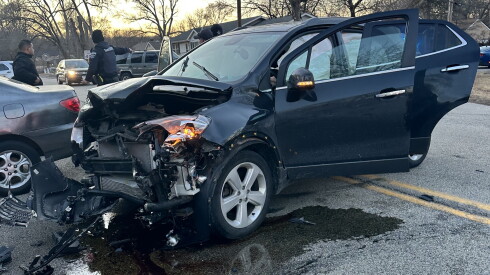
A lawyer for that driver’s insurance company, First Chicago Insurance, said Monday it was sending Barger $5,000, her portion of the settlement — about half of which will go back to her insurance company, Farmers.
Barger said Farmers paid her claim for the totaled vehicle right away.
“They had that within about 10 days,” she said.
She says First Chicago should have moved faster on the medical claims.
“It’s just so ridiculous,” she said. “I’m so over this.”
First Chicago’s outside corporate counsel Patrick Hincks said Barger’s case was complicated, involving several people and numerous medical bills and records, when asked why it took so long to resolve.
Barger had three passengers, one of whom had to have surgery for a hand injury and another who was seen at a hospital’s emergency department. Barger also had chiropractor bills.
“Because this matter involved multiple injured parties with one being a minor, you have to settle with all the parties … and as the injuries often exceed the policy limits, that adds another layer of complexity, as you can see you have to deal with the other insurance companies[sic] medical liens for amounts that they have paid as well. This is not a typical case and the duration is due to all these other factors,” Hincks said in an email.
First Chicago, which offers nonstandard insurance for drivers who don’t qualify for policies with more well-known insurers, had the highest complaint ratio of all auto insurers in Illinois, in a 2024 Sun-Times analysis of consumer complaints to the Illinois Department of Insurance.
At the time, Hincks said nonstandard insurance companies have more complaints because they insure high-risk drivers who have a history of accidents, traffic violations or poor credit and who have more interactions with their insurance companies.
Heller said while money taken in for premiums and spent on claims and administration is roughly one-to-one over time, the insurance industry makes money by investing premiums in the interim. Warren Buffett, former CEO of Berkshire Hathaway, called this “the float.”
Heller said if insurers had to pay consumers interest on delayed claims, they might move faster.
He advocates a 30-day limit for insurers to pay the depreciated value of what was lost; after that, negotiations could continue on what else is owed.
“Don’t keep the check in your mail room an extra day or two,” he said.
The Illinois Insurance Association, American Property Casualty Insurance Association and National Association of Mutual Insurance Companies said in a joint statement the analysis “oversimplifies a complex claims handling process to score political points. Insurers are committed to making their customers whole again as quickly and accurately as possible. This is the core objective of the business.”
The industry groups said insurance companies’ investment income “is part of the financial model that allows insurers to keep premiums stable over time and maintain the capital needed to pay current and future claims.”