The first and last time the Chicago City Council passed a sweeping renters’ rights ordinance was in 1986.
Ronald Reagan was president, Stevie Wonder and Lionel Richie were atop the Billboard 100 chart, and the median rent in some Chicago neighborhoods was around $515.
Forty years later, tenants face sky-high rents, bidding wars and piles of fees. They struggle to track down their own landlords when problems arise in their buildings. Landlords themselves face rising costs and property taxes that can make it hard to keep rent affordable.
Many agree the city’s Residential Landlord and Tenant Ordinance (RLTO) is due for a renovation.
Mayor Brandon Johnson has pitched a plan backed and crafted by tenants rights groups and housing advocates. A group of City Council members have pitched an alternative, more landlord-friendly version.
Both sides agree the bulk, or “98%,” of their proposals are the same. But the 2% where they diverge mark key differences.
In Chicago, there are more than 600,000 renters — more than half of all households in the city and an undeniably significant bloc of voters. Housing affordability could factor into the city’s upcoming mayoral and City Council elections. And as those races begin gearing up this fall, the debate over City Hall’s competing rental ordinances could come to a head.
Here’s what you need to know.
Who’s behind each proposal and what are the politics here?
Tenants rights groups have for years sought an overhaul of the city’s existing rental laws, seeking both modern-day protections and a second chance to fight for components left out of the original ordinance.
They finally found a City Hall ally in Johnson, who campaigned on the idea “housing is a human right” and introduced the “Protecting Renters Ordinance,” or PRO, in June. He called it the culmination of “years and years and years of struggle.”
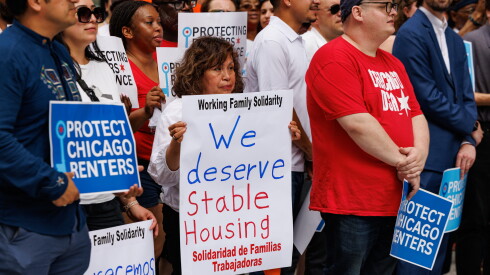
But Johnson’s relationship with the City Council has grown increasingly frayed, and a month later, moderate and conservative alders were out with their own version, dubbed the “Fair and Accountable Illinois Rental Ordinance,” or FAIR.
So far, the group is made up of 23 out of roughly 30 alders who opposed Johnson’s failed pitch for a new tax on corporations. Spearheaded by Ald. Gilbert Villegas (36th), the group also sought help from a political action committee called One Future Illinois, made up of wealthy and influential business people.
No tenants rights groups were consulted before the ordinance was introduced.
The Neighborhood Building Owners Association, which represents small and mid-sized landlords, was measured in its reaction to the FAIR ordinance, saying in a statement there are “still important issues to resolve” in order to “refine the ordinance.”
Who is considered a small landlord?
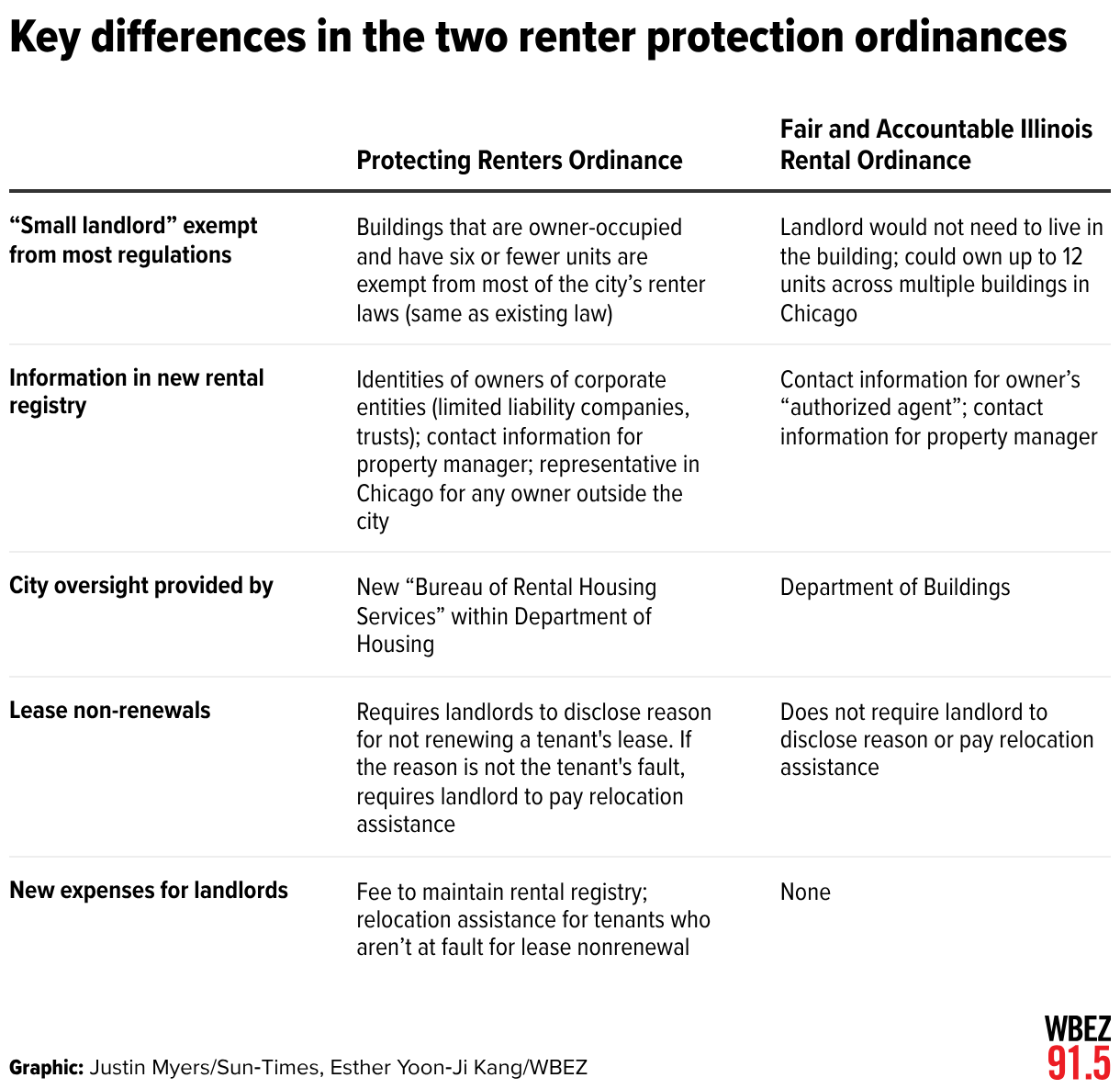
Currently, property owners who live in their building with six or fewer units are considered small landlords, and that building is exempt from most of the city’s renter laws — a definition maintained in the proposal from the mayor.
FAIR, the proposal from City Council, would create three tiers of landlords. Small landlords could own up to 12 rental units throughout Chicago and need not live in any of the buildings.
Villegas said the intent is to help “mom-and-pop” landlords expand their portfolios.
“The approach there was to help try to help those folks that are in this housing-providing business the opportunity to grow a little bit, and differentiate between [corporations like] Blackstone and J.P. Morgan versus Mr. and Mrs. Morgan, who live on the block,” Villegas said.
But some housing advocates say expanding exemptions to buildings with up to 12 units that are not owner-occupied could result in thousands of Chicago renters losing long-held tenant protections.
“FAIR is worse for tenants than the status quo and cannot be reasonably considered to be a tenant protection ordinance,” said Jonah Karsh, an organizer with the Metropolitan Tenants Organization.
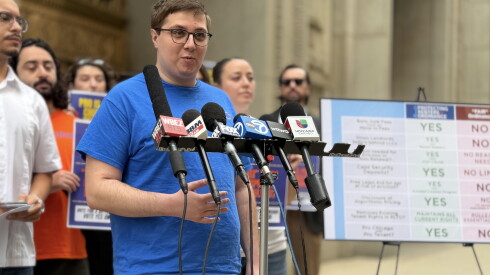
Daniel Kay Hertz, director of housing with the advocacy group Impact for Equity, said these “are not small rights” tenants could lose. “These are things like requiring 48 hours’ notice before the landlord can enter your apartment … or a prohibition on retaliation against tenants who report code violations.”
Hertz also said given the prevalence of limited liability companies as a form of property ownership, it would be difficult to verify “who fits in that [small landlord] category and who doesn’t.”
The long-awaited rental registry
To help track ownership and enforce city code, tenant groups have long advocated for a citywide rental registry, which would require landlords to disclose key information about their properties. Dozens of cities across the country already have versions of such a database.
Both PRO and FAIR call for a rental registry, but each proposal takes a significantly different approach.
FAIR would require that landlords provide only the property address and contact information for “the owner or the owner’s authorized agent” and for the person in charge of tenants’ repair requests.
PRO would require additional information, including details on who is responsible for an LLC or trust that owns the property. This, housing advocates say, would allow the city to identify neglectful landlords who may be hiding behind corporate entities.
“It’s really important that the registry be set up to succeed, to make sure that the city is getting out of the registry what it intends to,” Hertz said.
Villegas said “if there’s further discussions about the content that needs to be collected, we’re open to that.”

He favors using “off-the-shelf technology” and AI models to manage the registry, instead of the city charging a rental registry fee to maintain a new database.
Under the mayor’s PRO proposal, a new Bureau of Rental Housing Services would administer the registry and enforce the law. Villegas opposes “more red tape … and more government” and said work should be left up to the Chicago Department of Buildings.
Housing advocates and the mayor’s team say that agency is already stretched thin and no city department is currently dedicated to enforcing renters’ rights. Tenants typically rely on 311 calls and lawsuits.
‘Just cause’ could be the hardest fight for tenant rights groups
Alders behind the FAIR ordinance appear most concerned with the “just cause” provisions in the mayor’s proposal.
Currently, landlords aren’t required to give a reason when they don’t want to renew a tenants lease, which could be to rehab a property, convert it to condos or demolish it.
Under the mayor’s proposal, landlords would need to disclose the reason and pay relocation assistance to tenants who aren’t at fault. The relocation payment would range from around $3,000 to $5,000 for most landlords.
When asked if there was a dollar amount he and other alders could agree to, Villegas said, “If this does pass with a relocation fee, I can tell you that ultimately it’s going to end in rents going up.”
However, tenant advocates say that has not been the case in cities like Los Angeles and San Diego, where — despite enacting just cause provisions — rents decreased, and development has continued. Dozens of municipalities have just cause provisions in place.
Is a compromise possible?
There are some signs of potential compromise. Villegas said he has met with the mayor’s office about his proposal, plans to meet tenants rights groups and says revising his ordinance is “just a matter of continuing dialogue.”
Progressive firebrand Ald. Byron Sigcho-Lopez (25th), who chairs the housing committee, said it’s possible “that we can ease some of the content in the [PRO] ordinance.”
But the divisiveness seeded during Chicago’s contentious budget season last fall has not waned.
“If the mayor wants to take the stance that whatever he introduces is the gospel, then we’re going to find ourselves in not a good position,” Villegas said.
Johnson has slammed the opposition bloc in the press, calling their fight against the corporate head tax and, now, against increased renter protections “incredibly disappointing.”
Advocates hope ia meaningful compromise is still viable in a divisive political moment.
Regardless of the final proposal’s acronym, “what’s really important,” Hertz said, is “having members of council talk to each other, talk to advocates on all sides, and obviously the administration” to ensure that whatever passes doesn’t place “undue burdens on landlords” while still “advancing the interests of Chicago renters.”