Trey Yesavage did not simply lose the sixth inning. He exposed the thin line the Toronto Blue Jays are asking their rookie starter to walk every time he takes the mound.
For five innings Friday night, Yesavage looked like the most encouraging part of Toronto’s 13-3 loss to the Baltimore Orioles. He attacked the zone, got ahead of hitters and showed the swing-and-miss arsenal that has made him one of the most important young arms in the organization. Then the sixth inning arrived, and a promising start turned into another painful reminder that the Blue Jays are leaning heavily on a 22-year-old pitcher still learning how quickly a lineup can adjust.
Yesavage allowed two doubles, a walk, a single and a home run in the sixth as Baltimore erased Toronto’s lead and took control. The final line looked ugly, but the deeper numbers tell a more complicated story.
Yesavage’s Arsenal Still Showed Real Upside
The most encouraging part of Yesavage’s outing was the quality of his secondary stuff. According to Statcast, his splitter generated six whiffs on 13 swings, good for a 46% whiff rate. That pitch also produced three strikeouts and no hits on two balls in play. When he located it, Baltimore had very little answer.
His slider was also a weapon. Yesavage threw it 25 times, landed it for strikes at a 76% clip and produced a 44% called-strike-plus-whiff rate. That is the kind of pitch that can help him survive when hitters sit on the fastball. It also showed why Toronto has reason to keep giving him runway even after a rough box score.
The fastball was the concern. Yesavage averaged 94.6 mph, a slight tick above his season average, but Baltimore did damage when it got the pitch in the air. Opponents put 11 fastballs in play, with seven of them hit hard. The average exit velocity against the four-seamer sat at 93.8 mph, and his max exit velocity allowed reached 106.2 mph.
That does not erase the positives. It does, however, point to the next step.
The Sixth Inning Became a Development Test
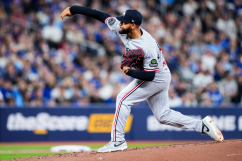
Yesavage threw 91 pitches, and the Orioles forced him to prove he could finish a lineup for the third time. His pitch usage shifted as the game went along, with his splitter and slider both rising to 38% usage the third time through. That suggests he and the Blue Jays knew Baltimore had adjusted to the fastball.
The problem was execution. Yesavage spent most of the night ahead in counts, posting a 75% first-pitch strike rate. He also produced 12 whiffs on 44 swings and 26 called strikes plus whiffs overall. Those numbers usually support a strong outing. Instead, Baltimore punished the mistakes that leaked into the zone.
That is why this start should not be viewed as a simple collapse. It was a rookie lesson wrapped inside a blowout loss. Yesavage looked sharper than he did in his previous outing against Baltimore, when seven walks undermined an otherwise effective performance. This time, he filled the zone, but the Orioles made him pay for living too close to the middle in the wrong spots.
For the Blue Jays, that creates both frustration and encouragement. They need wins now, especially after dropping five of six and falling four games under .500. They also need Yesavage to keep developing without letting one bad inning distort the bigger picture.
The splitter and slider looked like major league weapons. The fastball command needs refinement. The next challenge is learning when to elevate, when to expand and when to trust the secondary stuff before the damage starts.
Friday’s loss hurt Toronto badly, but Yesavage’s outing was not empty. It showed the arm is real. It also showed the Blue Jays cannot treat him like a finished product yet.
Like HEAVY’s content? Be sure to follow us.
This article was originally published on HEAVY
The post Blue Jays See Promise in Trey Yesavage Despite Loss appeared first on HEAVY.